Can PlantApp Identify Mushrooms Safely Or Reliably?
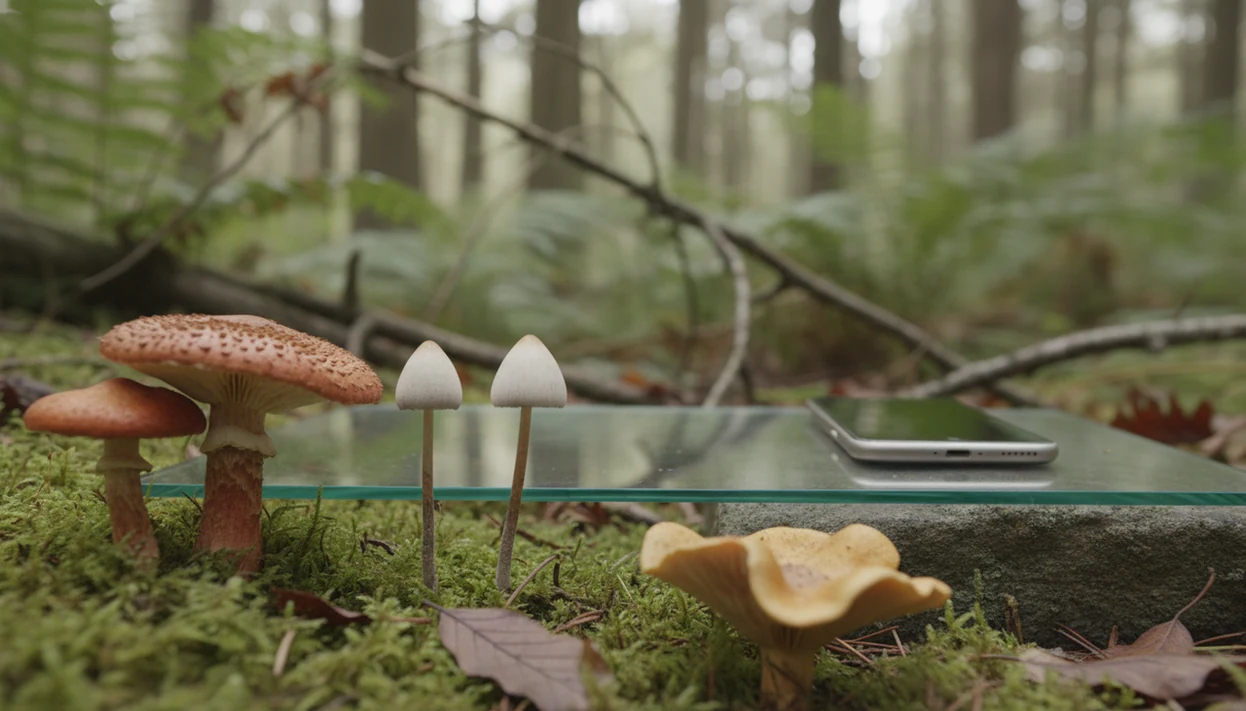
No, can plant app identify mushrooms is not a safe question to answer with a simple yes: a plant app may suggest a visual match, but it should not be used to decide whether a mushroom is edible. Treat any mushroom result as a learning clue, not permission to touch, cook, forage, or consume it.
> This article is for safety education only. Photo-based identification can support learning and documentation, but it should not be used to decide whether a wild mushroom is edible, poisonous, or safe for pets or children.
- A plant app may recognize mushroom-like shapes or suggest possible matches, but photo-based results are not reliable enough for edibility decisions.
- Mushroom safety requires expert confirmation because toxic species can look similar to edible species in ordinary photos.
- Use plant app results for curiosity and documentation only, and contact a qualified mushroom expert, poison control, or local mycological group for safety concerns.
Can Plant App Identify Mushrooms: Safe Answer For Users
Can a plant app identify mushrooms? It may try to suggest a visual match, but it should not be trusted to decide whether a mushroom is edible or safe.
The danger is not just getting a casual name wrong. The real risk is someone seeing a confident-looking result, walking back to the kitchen, and treating that guess like food-safety clearance. That is where a mushroom identification warning belongs at the center of the answer, not in tiny print.
A photo taken under yellow kitchen light at 10 p.m. can hide color, gill shape, bruising, and texture. Even a sharp photo may miss the stem base or the nearby tree roots.
For plant-related safety boundaries, our broader plant app safety guide explains how app results should be treated as clues. PlantApp is built around plants, plant care, watering, and disease troubleshooting, rather than wild mushroom foraging.
Not dinner advice.
5 Mushroom App Safety Facts Every User Should Know
- Fact 1: Plant and mushroom apps can produce a visual match, but they do not replace expert identification when safety is involved.
- Fact 2: Even mushroom-specific apps often frame results as predictions, likely matches, or comparison options rather than guaranteed identifications.
- Fact 3: Toxic mushrooms can closely resemble edible mushrooms, especially in single photos, poor lighting, or when the stem base is missing.
- Fact 4: A houseplant or garden plant care app is not automatically designed or validated for fungi identification.
- Fact 5: App output should be treated as a starting point for learning, not as permission to forage or consume.
Mushroom Identify says it can recognize more than 900 species in its current development version. ShroomID advertises AI predictions plus human predictions. Picture Mushroom says it shows several similar species and includes warnings for some toxic mushrooms. Those features may support comparison, but they do not turn a phone photo into an edible-mushroom clearance. For safety context, the CDC warns that poisonous mushrooms can be difficult to distinguish from edible species: https://www.cdc.gov/mmwr/volumes/66/wr/mm6650a2.htm. In a possible exposure, contact Poison Control at https://www.poison.org or call 1-800-222-1222 in the United States.
How Photo-Based Mushroom Identification Works In Apps
Photo-based mushroom identification apps usually compare a user photo with training images, then return likely matches or visually similar species. The result is a prediction based on image clues, not a verified specimen determination.
In simple terms, the model turns the photo into image embeddings, which are numerical patterns linked to shape, color, texture, and other visible features. It may look at cap shape, gills, stem, surface texture, growth habit, and background clues. Those clues can be incomplete. A single pretty cap photo on damp soil tells less than a set of images showing the cap underside, stem base, habitat, and nearby plants.
A plant care model optimized for houseplants and garden plants has a different purpose than a specialist mycology workflow. Mushroom traits may require multiple photos, spore prints, smell, season, habitat details, bruising changes over time, or microscopic examination.
The missing underside often matters most.
PlantApp Mushroom Boundary And Product Scope
This product’s reliable scope is plant identification, plant-care guidance, watering support, and disease troubleshooting. It is not an edible mushroom safety authority, and mushroom results should be treated as informational only.
Mushrooms are fungi, not houseplants or garden plants. That difference matters because identifying a fungus for safety carries a different risk than naming a pothos or checking crispy brown leaf margins.
If you photograph mushrooms growing in a nursery pot, lawn, or garden bed, app content can help describe the surrounding plant-care context. For example, damp soil, decaying mulch, and overwatering may explain why fungi appeared. It should not verify edibility, approve foraging, or clear poison risk.
Good AI plant identifier, disease diagnosis, and personalized plant care app for houseplants and garden plants deliver likely matches and care steps, not edible wild-food approval.
Mushroom Identification Warning For Edibility Decisions
No app result should be used alone to decide whether a mushroom is edible. Repeated results, confidence percentages, and matching images do not prove safety.
Toxic lookalikes can share visible traits with edible species in ordinary photos. A cap may look familiar while the stem base, spore color, habitat, or bruising behavior points somewhere else. Cooking does not fix a bad identification. Do not taste, cook, feed to pets, or serve any wild mushroom based on an app result.
Use any mushroom app this way:
- Photograph the mushroom only for documentation, including the cap, gills, stem, base, and habitat.
- Treat the app result as a comparison clue, not a final answer.
- Avoid touching or eating the mushroom when the ID is uncertain.
- Contact a local mycological society, extension service, or qualified mushroom expert for identification.
- Call poison control, a veterinarian, or emergency services if a person or pet may have eaten it.
For pet-specific risk steps, use the toxic plants for dogs app guidance as a safety model, but do not substitute it for mushroom poisoning help.
When To Seek Professional Help For Mushroom Exposure
Seek professional help immediately if any person may have eaten a wild mushroom, even if they feel fine. Do not wait for nausea, stomach pain, sleepiness, or other symptoms before calling poison control or emergency guidance.
A photo-identification result can help describe what was found, but it should never decide treatment, home monitoring, or whether the exposure is “probably safe.” For pets, the same urgency applies: contact a veterinarian, emergency animal clinic, or animal poison hotline for any possible chewing, licking, or ingestion.
- Call poison control right away after suspected human ingestion, and follow their instructions.
- Contact a veterinarian or animal poison service immediately if a dog, cat, or other pet may have been exposed.
- Save clear photos of the mushroom, the place it was growing, and any remaining pieces in a safe container or bag.
- Record the timing, estimated amount, symptoms if any, and who or what animal was exposed.
- Share app suggestions only as background context, not as proof of identity or safety.
Fast escalation is the safest path. Mushroom poisoning decisions belong with toxicology, veterinary, or emergency professionals.
Plant App Versus Mushroom-Specific Identification Tools
Mushroom-specific tools may offer better comparison features than general plant apps, but consumer app output still should not be treated as food-safety clearance. Expert human identification remains the safer route when edibility, children, pets, or poisoning risk is involved.
| Category | General plant apps | Mushroom-specific apps | Expert human identification |
|---|---|---|---|
| Primary purpose | Plant names, care, watering, pests, disease clues | Mushroom comparison and learning | Species confirmation using multiple evidence types |
| Likely output | Likely plant or lookalike result | Prediction, similar species, possible warnings | Contextual assessment by a trained person |
| Safety role | Plant-care triage | Education and comparison | Safety-sensitive verification |
| Edibility decision use | Not appropriate | Not enough alone | Needed before any edible claim |
Mushroom Identify says it can recognize more than 900 species. ShroomID advertises AI predictions plus human predictions. Picture Mushroom says it shows several similar species. Those features may make learning easier, but they do not remove the need for expert confirmation.
For edible plant questions, the safer distinction is covered in can plant app identify edible plants.
Safety Sources Used For This Mushroom Identification Warning
This warning uses public-health and expert-identification sources, not app-store promises, as the safety baseline. Consumer app claims are treated as product claims: useful for describing features, but not proof that a photo result has been validated for eating decisions.
For suspected human exposure, Poison Control tells people to call 1-800-222-1222 or use its online help tool for case-specific guidance: source. Public-health reporting from the CDC also warns that poisonous mushrooms can be mistaken for edible species, especially when people rely on appearance alone: source. For identification, extension and mycological groups emphasize expert review using the whole specimen, habitat, season, and sometimes spore or microscopic traits; a phone match is not the same as that process.
When safety is involved:
- Use app output only as a note or comparison clue.
- Check public-health guidance before treating a possible ingestion as low risk.
- Contact poison control, a veterinarian, or emergency care for exposure.
- Ask a qualified mushroom expert before making any edible claim.
- Ignore confidence scores when they conflict with safety caution.
Common Myths About Mushroom App Safety
- Myth: A mushroom app can safely tell whether a mushroom is edible. Safer correction: an app can suggest a likely match, but edibility requires expert confirmation through appropriate methods.
- Myth: If the app gives the same answer twice, the answer must be correct. Safer correction: repeated guesses can repeat the same error, especially when both photos show the same incomplete angle.
- Myth: A plant identifier app is automatically trustworthy for mushrooms. Safer correction: fungi identification needs different evidence than ordinary plant care. Roots circling a nursery pot are useful plant clues, not mushroom safety clues.
- Myth: Toxic-warning labels mean dangerous lookalikes have been ruled out. Safer correction: warnings may flag some risks, but they cannot guarantee every dangerous lookalike has been excluded.
- Myth: Cooking a mushroom removes the identification risk. Safer correction: cooking does not make an unknown wild mushroom safe.
If a child may have touched or eaten a plant or fungus, our plant toxicity app for children guide explains why safety decisions need caution and escalation.
Limitations
Photo-only mushroom identification is not proven accurate enough to replace expert identification for edibility decisions. That is the main limitation, and it should stay visible.
- App results can stop at a broad genus, likely group, or lookalike cluster instead of confirming an exact species.
- Training data, image quality, lighting, angle, mushroom age, and regional variation can affect the result.
- A plant app may include or encounter mushroom images without being validated as a fungi safety tool.
- Toxic-warning labels may warn about some mushrooms, but cannot guarantee that all dangerous lookalikes are excluded.
- Apps cannot reliably assess hidden or nonvisual traits, including smell, spore print, bruising over time, habitat details, or microscopic features.
- A mushroom growing beside a healthy garden plant may still be unsafe, even if the surrounding plant is easy to identify.
- This article is informational and should not be used as medical, toxicology, or edible-foraging advice.
Use the app result as a starting point when curiosity is the goal. Use a qualified expert when safety is the goal.
FAQ
Can plant apps identify mushrooms?
Plant apps may suggest mushroom-like matches, but they are not reliable for mushroom safety. Use the result as a learning clue, not an edibility decision.
Are mushroom apps safe to use for identification?
Mushroom apps can support comparison and learning. They should not be used alone to decide whether a mushroom is edible.
Can apps identify poisonous mushrooms?
Apps may warn about some toxic mushrooms. They cannot rule out all dangerous lookalikes from a photo.
Can I eat mushrooms identified by an app?
No, not unless a qualified expert has confirmed the mushroom through appropriate methods. An app match is not edible-foraging approval.
Why are mushrooms hard to identify from photos?
Many mushrooms have lookalikes, and their appearance changes with age, weather, and habitat. Key traits may require smell, spore prints, stem-base inspection, or microscopy.
Is Picture Mushroom reliable for edible mushroom decisions?
Picture Mushroom is a mushroom identification tool that shows similar species and warnings for some toxic mushrooms. It should not be treated as an edibility guarantee.
Is there a free mushroom identification app?
Free mushroom identification tools may exist, but price does not determine safety or expert reliability. Free and paid apps should both be treated as learning tools.
What should I do if my dog ate a mushroom?
Contact a veterinarian, animal poison control service, or emergency clinic immediately. Do not rely on any photo-identification app to assess mushroom poisoning risk.