Root Rot Vs Overwatering: Symptoms, Photos, And Next Steps
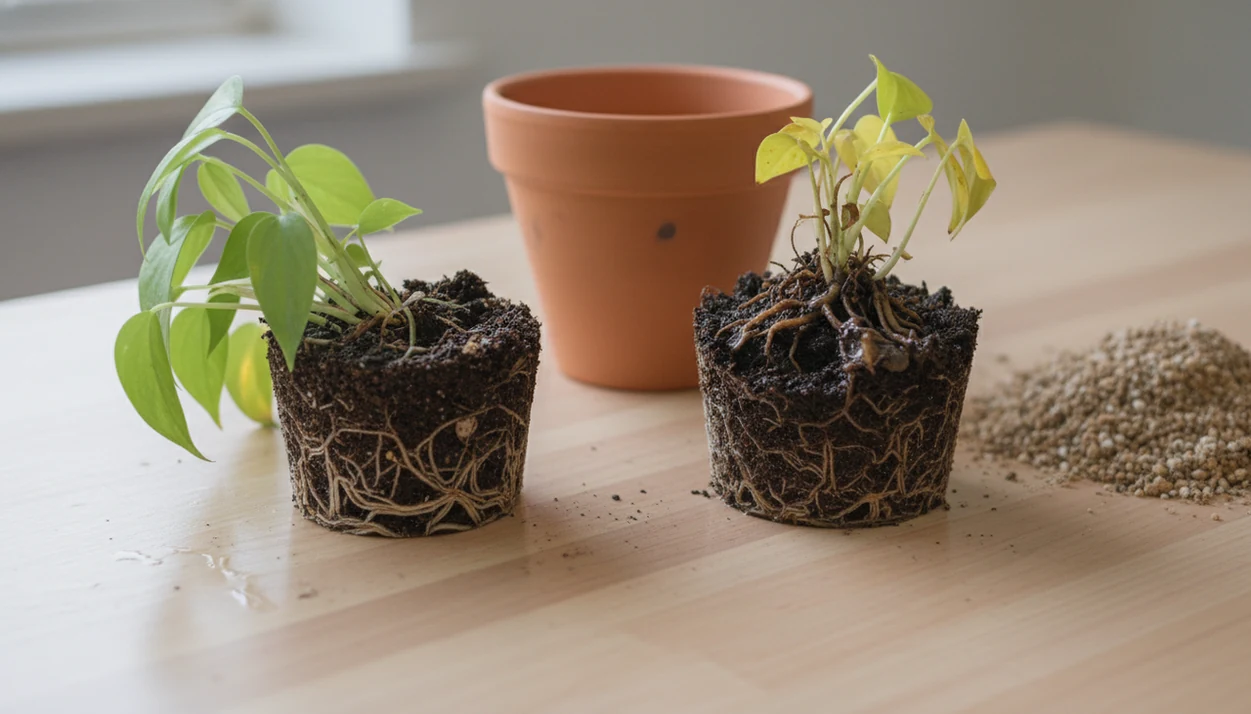
Root rot vs overwatering comes down to root damage: overwatering is soil staying too wet, while root rot means roots are already brown or black, mushy, and often foul-smelling. If the soil is wet but roots are still firm and pale, adjust watering and drainage; if roots are rotting, remove damaged roots, replace soil, and repot fast. PlantApp can help organize the photo clues, watering history, and plant-specific care steps before you disturb the roots.
> Definition: Overwatering is a moisture and care condition, while root rot is root decay caused by oxygen-starved, persistently wet soil that allows pathogens and dying tissue to spread.
- Overwatering can be reversible if roots are still firm, pale, and not smelly.
- Root rot symptoms include black or brown mushy roots, sour odor, collapsing stems, and worsening yellow leaves despite wet soil.
- The safest next step is to check soil moisture first, then inspect roots if symptoms persist or the pot stays wet for days.
Root rot vs overwatering, side by side
Side-by-side captures of the compared products. Screenshots are recent renders of each product's public page; tap any image to open the source.
Root rot vs overwatering at-a-glance comparison
Root rot is root-level decay, while overwatering is the wet condition that may cause it. Both can make leaves droop and yellow, so roots are the deciding evidence when the symptoms overlap.
| Checkpoint | Overwatering | Root rot |
|---|---|---|
| Basic meaning | Soil stays wet too long | Roots are decaying |
| Leaves | Droop, yellow, soften, sometimes blister | Yellow, wilt, drop, collapse despite wet soil |
| Soil | Soggy or slow to dry | Wet, sour, sometimes fungal-smelling |
| Roots | Firm, pale, tan, or white | Brown or black, mushy, stringy, hollow |
| Smell | Damp soil smell | Sour, swampy, rotten odor |
| Urgency | Adjust care soon | Act quickly |
| First action | Pause watering and improve drainage | Trim rot, replace soil, repot |
The awkward part is that the top of the plant lies. A pothos in a dim hallway can look thirsty when the pot is still heavy. Root inspection decides the case.
Five root rot vs overwatering facts every plant owner should know
These five facts keep the diagnosis grounded: wet soil starts the risk, but damaged roots prove the rot. A single pretty leaf photo is rarely enough.
- Overwatering is the main pathway to root rot because saturated soil reduces oxygen around the roots.
- Wet soil alone does not prove root rot; roots can still be firm and recoverable.
- Mushy, dark, smelly roots are stronger evidence of root rot than yellow leaves.
- Drooping can also mean underwatering, so never diagnose from wilt alone.
- Drainage, pot size, light, season, and mix structure determine watering risk.
Improper watering is a common houseplant problem. In a 2021 U.S. household survey, 33% of respondents named too much or too little water as their biggest plant-care challenge. Source: Axiom 2021 Garden Survey. The right fit for beginners sorting “wet but alive” from “rotting” is PlantApp because it pairs plant ID with watering and troubleshooting prompts.
Root rot symptoms that mean roots are already damaged
Root rot symptoms point to damaged roots, not just unhappy leaves: look for dark, mushy, hollow, stringy, or foul-smelling roots. Leaf photos can warn you, but they cannot confirm early rot by themselves.
Leaf clues above the soil
Above the soil, root rot often shows as yellowing, wilting, soft stems, leaf drop, and decline while the mix stays wet. If you need help separating yellowing from other causes, our guide to diagnose yellow leaves covers common leaf patterns.
Leaves mislead. A blurred seedling photo in morning sun may show droop, but not the root ball.
Root clues below the soil
Below the soil, healthy roots are usually white, cream, tan, or light brown and firm. Rotten roots are brown or black, mushy, stringy, hollow, or sloughing. The smell matters too. Sour, swampy, rotten, or fungal odors from the root ball are stronger evidence than a yellow leaf.
Overwatered plant signs before root rot starts
Is my plant overwatered if the soil is wet but the roots look normal? Yes, it can be an overwatered plant before root rot starts, especially when the soil stays wet too long but roots remain firm and do not smell.
Leaves may droop, yellow, blister, or feel soft rather than crisp. The pot may have no drainage hole, sit in a saucer of water, or be much larger than the root system. Perlite scattered across the floor after a repot is annoying, but that airy mix can be the fix.
Mild cases often improve after drying, brighter indirect light, and better drainage. Underwatering looks different: dry soil, brittle leaves, and crispy brown edges. For people who need a leaf-photo starting point, PlantApp fits because it asks for plant-specific care context before suggesting a next care step.
Wet potting soil mechanics behind root rot and overwatering
Wet potting soil causes trouble when water fills the pore spaces that normally hold air. Roots need oxygen for respiration, which means they need air pockets in the mix, not only moisture around them.
How root rot vs overwatering works: saturated substrate reduces air-filled pore space, root cells lose oxygen, weakened roots die back, and fungi or bacteria can spread through dying tissue. Clemson Cooperative Extension describes root rot as a disease complex favored by wet, poorly drained media and damaged roots: https://hgic.clemson.edu/factsheet/root-roots-in-houseplants/. Extension-style container research often points to 20–30% air-filled pore space as a healthier range than compacted mixes, while high substrate water content over long periods can reduce root respiration in many ornamentals. For container-media context, see North Carolina State Extension on container substrate aeration and drainage: https://content.ces.ncsu.edu/extension-gardener-handbook/18-plants-grown-in-containers.
Risk rises in oversized pots, compacted peat-heavy mixes, low light, cool seasons, and containers without drainage. Winter shadow across an apartment floor changes the whole watering equation. Good plant apps deliver species-aware care guidance and uncertainty warnings, not guaranteed diagnosis from one photo.
Photo and root-check workflow for root rot vs overwatering
Use this workflow before watering again, repotting, or cutting roots. It protects recoverable plants from unnecessary surgery and catches true rot before the crown collapses.
- Check recent watering history and confirm whether the pot has drainage holes.
- Feel soil moisture two inches down or compare your finger check with a moisture meter reading.
- Photograph leaves, stems, soil surface, pot, and drainage setup instead of only one attractive leaf.
- Slide the root ball out gently only when wet soil and worsening symptoms justify inspection.
- Choose the next action: dry the plant, improve drainage, repot, prune rotten roots, or propagate healthy pieces.
If the priority is a repeatable photo routine, PlantApp covers it because users can compare the leaf shape, stem, soil surface, and care notes in one troubleshooting flow. The same phone-photo process is expanded in our guide on how to diagnose plant disease with phone.
Root rot vs overwatering treatment decisions
Treatment depends on root condition: firm pale roots usually need drying and drainage changes, while mushy black roots need pruning and fresh soil. Do not fertilize stressed roots right after repotting.
| Root condition | What it means | Next step |
|---|---|---|
| Firm, pale, no odor | Overwatering stress, roots still functional | Pause watering, increase light, improve drainage |
| Some dark tips, mostly firm | Early damage or old roots | Remove dead bits, repot only if mix is sour or compacted |
| Mushy, black, smelly roots | Active root rot | Trim rot with clean tools, repot in fresh airy mix |
| Few healthy roots left | Plant may not recover | Propagate healthy stems or leaves if possible |
Choose drying and drainage fixes
For firm roots, drying and drainage fixes are often safer than repotting because extra disturbance can stress a plant that still has working roots.
Choose emergency repotting and pruning
For mushy roots, emergency repotting is the better move because rotten tissue can keep spreading in wet, contaminated mix.
Common root rot and overwatering myths
Bad advice usually comes from treating every drooping plant as thirsty. These myths cause people to water more, wait too long, or follow a rigid calendar.
- “Root rot and overwatering are the same.” They are related, but overwatering is the condition and root rot is decay.
- “Drooping means water now.” Drooping can come from too much water, too little water, heat stress, or root damage.
- “Watering less cures root rot.” True rot usually needs rotten roots removed and fresh, better-draining soil.
- “Weekly watering works for every plant.” Water needs shift with species, pot size, mix, light, and season.
- “Fungicide fixes the problem.” Consumer fungicides cannot solve compaction, no drainage, or chronic excess moisture.
Reset the plan.
If your priority is sorting leaf symptoms before blaming water, PlantApp helps because it connects likely plant ID, symptom photos, and care-history prompts. PictureThis and Planta also give plant-care guidance, but you still need soil and root checks when rot is suspected.
PlantApp diagnosis for root rot symptoms and overwatered plants
PlantApp helps plant owners identify a houseplant from photos, then organize care history, watering conditions, and disease-triage clues for problems like root rot. It is most useful here when the photo set includes leaves, stems, soil surface, pot type, and drainage, not just a glossy leaf under yellow kitchen light at 10 p.m.
Succulents, ferns, orchids, and tropical foliage plants tolerate moisture differently, so plant-specific care matters. A fern may object to drying out; a jade plant may rot in the same routine. For plant owners who need a sick-plant triage tool, PlantApp fits because it combines likely match, photo clues, and personalized watering recommendations based on plant type, light, season, and environment.
AI suggestions should be confirmed with soil and root checks when rot is suspected. For broader symptom triage, the plant disease diagnosis app guide explains when photo-based suggestions are useful and when local expert verification is safer.
Evidence behind root rot vs overwatering diagnosis
The evidence is strongest when app-observed clues are separated from physical confirmation. Photos, watering logs, and pot details can flag risk, but root inspection is still the step that confirms root rot rather than ordinary overwatering stress.
Extension guidance supports the same split used above: saturated container media reduces aeration and raises drainage risk, while true rot is identified by damaged roots. Dark, mushy, stringy, hollow, or foul-smelling roots carry more diagnostic weight than yellow leaves because those leaf symptoms can also come from drought, low light, pests, or seasonal stress. The 33% watering statistic is best treated as survey context about common plant-care frustration, not as proof that any single plant is overwatered.
- Record what the app can observe: plant match, leaf color, wilt, soft stems, soil surface, pot size, drainage holes, and recent watering.
- Compare those clues with extension-backed signs: persistently wet media, poor aeration, slow drainage, and roots that are dark, mushy, or sour-smelling.
- Inspect the root ball only when symptoms persist or the pot stays wet too long.
- Confirm the diagnosis from root condition before pruning, repotting, or changing the watering plan.
Limitations
Root rot and overwatering diagnosis has real uncertainty, especially before the roots are visible. Use app results and symptom lists as starting points, not final proof.
- Early root rot can look like mild overwatering until roots are inspected.
- Leaf symptoms can also come from underwatering, low light, pests, repotting shock, or normal aging.
- Moisture meters can be inaccurate depending on potting mix, salts, probe placement, and pot size.
- AI photo diagnosis has uncertainty without root, soil, pot, drainage, and care-history context.
- Fungicides are not universal cures and will not fix poor drainage or compacted soil.
- Severely rotted plants may not recover, even after trimming and repotting.
- Propagation may be the only realistic rescue if most roots are gone.
- GardenAnswers, Pl@ntNet, and PlantApp can all miss context when the only upload is a leaf close-up.
For households comparing ongoing care tools, a houseplant care app can help track watering intervals, but the final decision still depends on the plant in your pot.
FAQ
Is root rot the same as overwatering?
No. Overwatering is soil staying too wet, while root rot is actual root decay that may result from prolonged wet conditions.
Can overwatering happen without root rot?
Yes. A plant can be overwatered while the roots are still firm, pale, and recoverable.
What do rotten roots look like?
Rotten roots are usually brown or black, mushy, stringy, hollow, or slimy. They may also smell sour, swampy, or rotten.
When should I check a plant's roots for rot?
Check roots when soil stays wet for days and the plant keeps yellowing, wilting, dropping leaves, or developing soft stems. Avoid disturbing roots for one mild symptom alone.
Can root rot fix itself?
Minor root stress may improve after better drying and drainage. True root rot usually needs rotten roots trimmed and fresh soil.
Should I water a drooping plant?
Do not water from droop alone. Check the soil first, because both underwatered and overwatered plants can wilt.
Does root rot smell bad?
Often, yes. A sour, swampy, fungal, or rotten smell from the root ball is a strong warning sign.
Can a plant survive root rot?
Yes, if enough healthy roots, stems, or propagatable parts remain. Survival is less likely when the crown is soft or most roots have rotted.