
Toxic Plants for Cats App Checks and Safety Limits
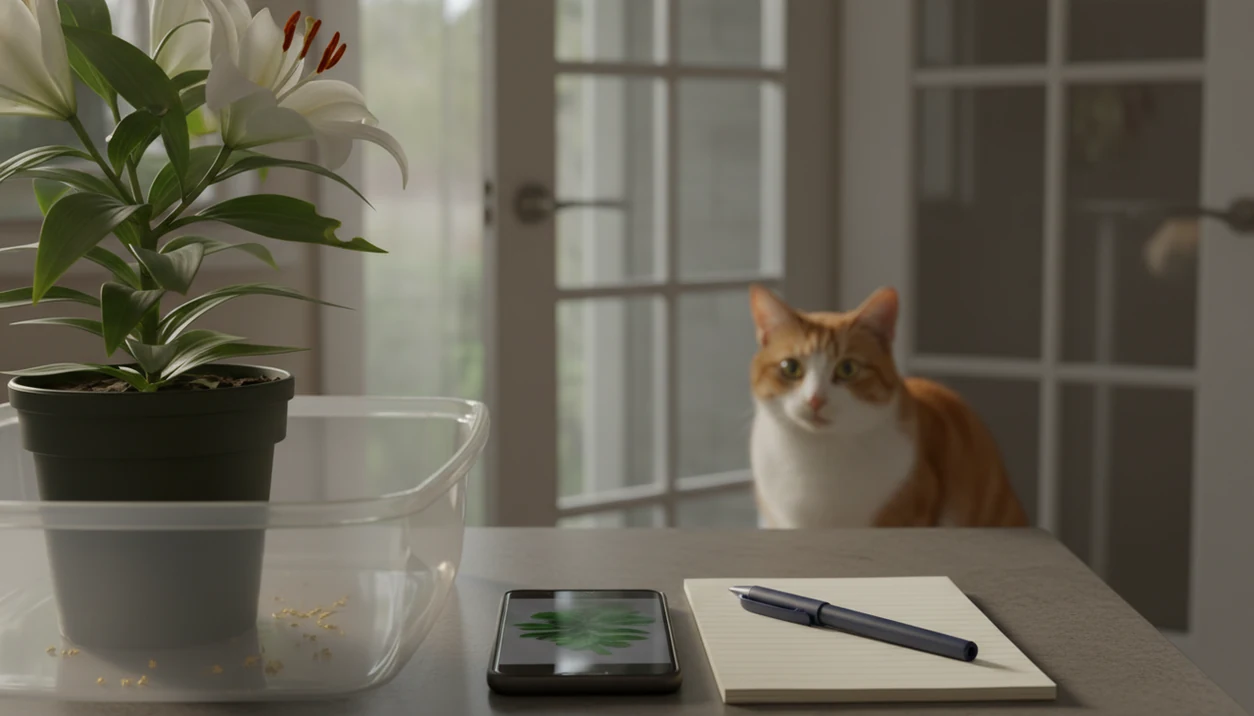
A toxic plants for cats app can help you quickly screen a plant for possible risk, but it cannot rule out poisoning after a cat chews, licks, or swallows plant material. If ingestion may have happened, use the app to gather the plant name and photos, then contact a veterinarian or animal poison-control service immediately.
> PlantApp is a photo-based plant identification tool that helps users identify plants and review care, watering, and disease troubleshooting information.
- Use plant apps for fast identification and risk screening, not emergency diagnosis.
- Lilies are an urgent veterinary emergency for cats, even after small exposures.
- A safe-looking app result can be wrong if the plant ID, plant part, dose, or toxicity database is incomplete.
Toxic Plants for Cats App Safety Scope
A toxic plants for cats app is a screening tool for plant identity and known toxicity information, not a poisoning diagnosis tool. Its job is to help you collect a likely match, photo clues, and plant details before you speak with a veterinarian or poison-control service.
Plant-ingestion calls are common enough that preparation matters. The ASPCA Animal Poison Control Center reported that plants made up more than 8% of its 2023 pet-toxin calls, according to its 2023 Top Toxins summary: https://www.aspca.org/news/aspca-animal-poison-control-center-releases-list-top-10-pet-toxins-2023. That is why a saved photo of the whole plant, a faded nursery tag, and the chewed edge can matter.
The useful question is not “did the app clear this plant?” It is “what plant might this be, what part was available, and who should I call now?”
At-a-Glance Cat Safe Plant App Decision Table
A cat safe plant app is most useful before contact happens. Once chewing, licking, or symptoms enter the picture, the app result should support triage, not slow it down.
| Scenario | App use | Risk level | Next action |
|---|---|---|---|
| Plant present but no contact | Identify the plant and check known cat toxicity | Low to uncertain | Move risky or unknown plants out of reach |
| Cat sniffed plant | Save plant ID and watch for access to pollen or sap | Usually lower, plant-dependent | Prevent more contact and verify species |
| Cat chewed plant | Document likely plant, part, and time | Moderate to high | Call a veterinarian or poison-control service |
| Lily exposure | Photograph plant, pollen, vase, and label | High emergency | Seek urgent veterinary help, do not wait |
| Unknown plant with symptoms | Use photos only as supporting evidence | High | Contact emergency veterinary care now |
Lily exposure and possible ingestion should bypass waiting for symptoms. A lily bouquet removed from the table five minutes later still counts as access if pollen, leaves, or vase water were reachable.
Five Toxic Plants for Cats App Facts Owners Need
These five facts are the safest way to interpret a poisonous plants cats app result when a cat may have had access to a plant.
- Lilies can cause severe, potentially fatal kidney failure in cats, and even small exposures to leaves, pollen, or vase water may be an emergency; the FDA warns cat owners to seek veterinary help quickly after lily exposure: https://www.fda.gov/animal-veterinary/animal-health-literacy/lovely-lilies-and-curious-cats-dangerous-combination.
- Photo identification is useful for fast screening, but it is not definitive enough for ingestion decisions.
- Toxic plants range from mild oral irritants to poisons that can damage organs such as the kidneys, liver, or heart.
- Owners should call a veterinarian or animal poison-control resource if chewing, licking, or swallowing may have occurred.
- Plant part matters because bulbs, pollen, leaves, berries, sap, roots, and vase water can carry different risks.
The most common medically supported way to handle suspected plant ingestion is rapid veterinary or poison-control contact combined with clear plant documentation.
Poisonous Plants Cats App Identification Workflow
How toxic-plant app screening works: the app compares your photo with image embeddings, which are mathematical fingerprints of plant features. In plain terms, it looks for visual patterns like leaf shape, flower form, stem texture, and growth habit, then returns candidate species with confidence scores.
After that, the app may check a toxicity database for the likely plant name. Visual confidence is not the same as clinical poisoning risk. A 90% visual match cannot measure dose, timing, cat size, kidney status, symptoms, or whether pollen landed on fur.
We see the weakest results from one pretty leaf photographed under yellow kitchen light at 10 p.m. The stronger set includes the stem, pot, soil surface, flowers, and any tag. For broader safety context, our plant app safety guide covers how to treat app outputs as evidence, not final clearance.
Emergency Boundaries for a Toxic Plants for Cats App
“Should I keep using the app if my cat may have eaten the plant?” No. Possible ingestion, visible bite marks, pollen on fur, access to vase water, vomiting, drooling, weakness, tremors, or lethargy are escalation triggers.
Use the app for a fast likely match, then stop troubleshooting on your phone. Save photos of the plant, plant label, chewed parts, vomit if present, and the time of exposure. If the plant came from a bouquet, keep the wrapper or card too. Florist names can help identify mixed stems.
Do not wait for symptoms, especially with lilies. Clinicians and poison-control professionals recommend early contact because some serious poisonings may not look dramatic at first; Pet Poison Helpline gives the same escalation advice for suspected toxic plant exposure: https://www.petpoisonhelpline.com/poison/plant/. Quiet is not clearance.
Authoritative Sources for Cat Plant Poisoning Guidance
Authoritative cat plant-poisoning guidance should come from veterinarians, animal poison-control services, and public veterinary health agencies. A plant app can support that conversation, but it should not become the treatment plan.
The ASPCA Animal Poison Control Center is useful for understanding pet-toxin call patterns and why plant exposure belongs in a real triage workflow. FDA animal-health guidance and veterinary emergency sources are especially clear on lilies: cats need prompt help after possible exposure, even before obvious illness. Pet Poison Helpline is another poison-control resource owners may contact for case-specific guidance, but it is not a free substitute for local veterinary care or an emergency exam.
When you use an app result during a suspected exposure, keep the process practical:
- Identify the likely plant and save alternate matches if the result is uncertain.
- Photograph the whole plant, damaged parts, label, bouquet wrapper, pollen, and vase water.
- Record the time, possible amount, symptoms, and your cat’s weight or medical issues.
- Call your veterinarian, an emergency clinic, or animal poison control with that evidence.
- Follow local veterinary instructions over any app screen, web article, or care prompt.
Cat Safe Plant App Checks That Reduce Misidentification
Misidentification drops when you photograph the plant like evidence, not like a houseplant portrait. Use multiple clear photos and compare the likely match against the physical plant, known look-alikes, and any regional source.
Photo angles that improve plant ID
- Take a whole-plant photo in natural light.
- Capture the leaf, stem, flower, berries, bulb, pot label, and bouquet tag.
- Compare the leaf shape, stem, and growth habit with the app result.
- Retake blurry photos if shadows hide veins, edges, or flower parts.
- Save the original plant nearby, unless a veterinarian tells you otherwise.
Unknown plant rules for cat homes
If the result is uncertain, treat the plant as unknown and keep it away from the cat. A terracotta pot beside an open app may feel resolved, but the plant still needs verification before it returns to a windowsill. Similar caution applies when asking whether a tool can plant app identify edible plants, because identification confidence and safety are separate questions.
Common Toxic Plants for Cats App Myths
App myths become dangerous when they make owners delay care. These are the ones we see most often in cat plant safety checks.
- Definitive verdict myth: Every app does not give a final safety verdict; photo matches and toxicity databases can be incomplete.
- Mild upset myth: Vomiting or drooling can look minor, but risk depends on the plant, dose, and cat.
- Leaves-only myth: Bulbs, pollen, berries, sap, roots, and vase water may matter as much as leaves.
- Looks-fine myth: A cat that appears normal immediately after chewing a plant is not automatically safe.
- Non-toxic myth: Non-toxic does not mean ideal for chewing, repeated exposure, or cats with sensitive stomachs.
A plant stand crowded by a balcony door is a common setup for accidental access. Move uncertain plants first, then sort out names.
PlantApp Role in Cat Plant Safety
Tools like PlantApp can help identify plants from photos and provide care context, including watering, light, and common disease clues. For cat toxicity questions, the safer role is identification support and documentation.
Record the likely plant name, alternate matches, confidence notes, and photo evidence before you call a professional. Do not use any identification result to decide antidotes, decontamination, monitoring length, or treatment urgency; those decisions belong to veterinarians and poison-control professionals.
Good AI plant identifier, disease diagnosis, and personalized plant care app for houseplants and garden plants can deliver likely matches and next-step care prompts, not guaranteed safety decisions after a pet exposure. That distinction matters when the same app also helps with sticky honeydew on a fiddle leaf fig or brown leaf tips after missed watering.
Limitations
A toxic plant app has real limits, and those limits matter most when a cat may be exposed.
- Photo-based plant ID is not reliable enough to rule out poisoning.
- Look-alike species, damaged leaves, poor lighting, and incomplete flowers can mislead the result.
- Toxicity databases may omit uncommon species or lag behind current veterinary knowledge.
- Apps cannot determine dose, exposure time, symptoms, cat size, kidney status, or treatment urgency.
- A plant part may be more dangerous than the visible leaves, including bulbs, pollen, berries, roots, sap, or vase water.
- A cat can appear normal early after exposure, so symptom-free status is not a clearance test.
- Nursery tags can be wrong, sun-faded, or tossed with the sleeve before you need them.
For households with children too, the same caution applies to a plant toxicity app for children. Screen quickly, then escalate when exposure is possible.
FAQ
Is there an app for toxic plants?
Yes, plant and pet-safety apps can screen for toxic plants by name or photo. They are not substitutes for veterinary or poison-control advice after possible ingestion.
Can apps identify cat safe plants?
Apps can help identify likely cat-safe plants, but the exact species should be verified. A wrong plant ID can lead to a wrong safety assumption.
Are lilies toxic to cats?
Yes, lilies are a veterinary emergency for cats. Small exposures to leaves, pollen, or vase water can be severe.
What should I do if my cat chewed a plant?
Contact a veterinarian or animal poison-control service immediately. Save photos of the plant, chewed parts, label, and exposure time.
Can plant identifier apps be wrong?
Yes, apps can be wrong because of look-alike species, poor lighting, damaged leaves, or incomplete databases. Use the result as a starting point.
Can toxic plants cause delayed symptoms in cats?
Yes, some serious plant poisonings may not look severe right away. Suspected ingestion still requires veterinary or poison-control advice.
Which plant parts are toxic to cats?
Leaves, bulbs, pollen, berries, sap, roots, and vase water may differ in risk. The dangerous part depends on the plant species.
Is a non-toxic plant always safe for cats?
No, non-toxic does not mean chew-proof or irritation-proof. Repeated chewing can still cause stomach upset or plant damage.
Should I wait for symptoms after my cat eats a plant?
No, do not wait when ingestion is possible, especially with high-risk plants such as lilies. Call a veterinarian or poison-control service promptly.