Diagnose Yellow Leaves On Plants Without Guessing Wrong
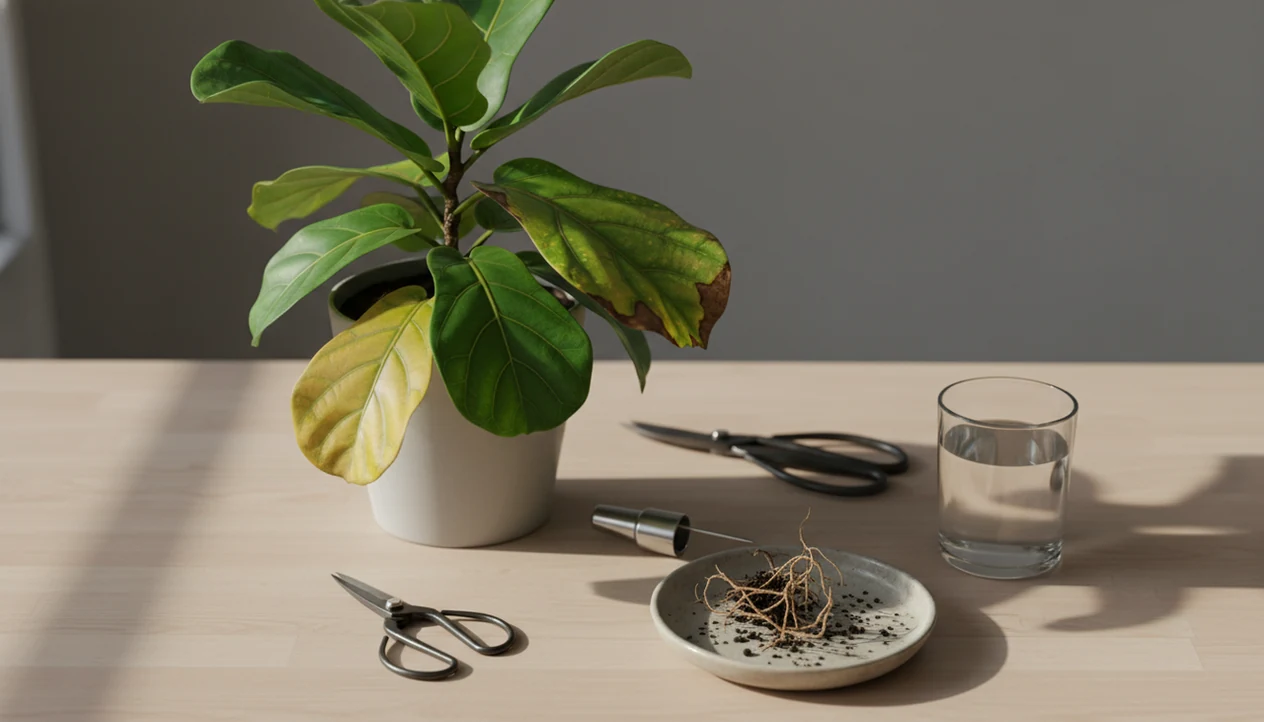
To diagnose yellow leaves, start with the pattern: which leaves are yellow, how fast it spread, what the soil feels like, and whether spots, pests, wilting, or root problems are present. Yellowing is a symptom, not a cause, so check watering, light, nutrients, pests, roots, season, and plant species before changing care.
> Definition: Yellow leaves on plants are a visible chlorosis symptom that can come from normal aging, water stress, light stress, nutrient imbalance, root damage, pests, disease, or environmental shock.
TL;DR
- A few lower yellow leaves can be normal, but fast, widespread, spotted, or wilting yellow leaves need investigation.
- Overwatering is the most common indoor cause, but low light, dry soil, nutrient deficiency, pests, hard water, and root damage can look similar.
- The most reliable diagnosis comes from matching the yellowing pattern to soil moisture, leaf age, root condition, recent care changes, and plant species.
Yellow Plant Leaves At A Glance: Pattern Before Treatment
Yellow leaves are symptoms, not a diagnosis. Start by matching the visible pattern to the plant’s soil, roots, light, and recent care history before you water, prune, or fertilize.
| Yellowing pattern | Likely causes | First check |
|---|---|---|
| Old lower leaves yellow slowly | Normal aging, nitrogen shortage, past stress | Count how many leaves and how fast |
| New leaves yellow | Iron chlorosis, root stress, high pH | Look for green veins and check water quality |
| Yellow between green veins | Nutrient uptake issue | Compare old leaves versus new leaves |
| Yellow with brown tips | Salts, hard water, dry spells, fertilizer burn | Review water type and soil moisture swings |
| Yellow with spots | Fungal, bacterial, pest, or splash injury | Inspect leaf undersides and spacing |
| Yellow plus wilt | Overwatering, underwatering, root damage | Check soil at finger depth |
| Sudden whole-plant yellowing | Cold, heat, repot shock, root failure | Review the last 7 to 14 days |
Two causes often overlap. Low light plus overwatering is the classic apartment-window combination, especially in winter shadow across an apartment floor.
Five Facts That Prevent Wrong Yellow Leaves Diagnosis
These five facts stop most rushed fixes. They also explain why one yellow leaf and a whole yellowing plant deserve different responses.
- Yellow plant leaves are a symptom, not the disease itself. Treat the cause, not the color.
- Overwatering is the number one reason indoor plants fail. University of Maryland Extension says yellowing is often an early sign when roots stay too wet source.
- Old leaves versus new leaves is a major clue. Nitrogen problems usually show first on older foliage because nitrogen moves within the plant.
- Environment and care history often matter more than pests. A cold draft, dark corner, or heavy watering habit can mimic disease.
- Some lower leaf yellowing is normal aging. One tired lower leaf on a pothos is not the same problem as ten yellow leaves overnight.
The pot tells on you.
We often find the answer in the saucer, not on the prettiest leaf.
How Yellow Leaves On Plants Work Biologically
Yellow leaves happen when a plant loses chlorophyll or cannot produce enough chlorophyll, the green pigment used for photosynthesis. In plain terms, the leaf is no longer making or holding its normal green color.
Roots, water movement, oxygen, light, and nutrients all feed into that process. Waterlogged roots may lack oxygen. Dry roots cannot move water well. Low light reduces the plant’s ability to use water and nutrients. Mobile nutrients, such as nitrogen, can be moved from older leaves into newer growth, so older leaves yellow first. Less mobile micronutrients, such as iron, often show trouble on young leaves.
High pH, hard water, and salt buildup can also block uptake even when nutrients are present in the pot. That is why fertilizer is not always the fix. Sometimes the plant has food nearby but cannot use it.
Before You Diagnose Yellow Leaves: Photos, Soil, Roots, And Care History
Before you diagnose yellow leaves, document the plant from several angles. Photograph the whole plant, the top and bottom of affected leaves, stems, soil surface, and pot drainage holes.
Do not photograph only one pretty leaf. That habit hides the stem, pot, and soil clues. Take a second photo in natural light if the first one was under yellow kitchen light at 10 p.m. Then check moisture at finger depth, or use a moisture meter beside a snake plant or other slow-drinking houseplant.
Ask what changed. Recent repotting, moving rooms, fertilizing, pruning, heat, cold drafts, and watering shifts all matter. Plant tags faded by sun or tossed with the nursery sleeve can make species-specific care harder, so compare leaf shape, stem, and growth habit.
Tools like PlantApp can use photos plus care context to prioritize likely causes, but physical inspection still matters.
How To Use A Yellow Leaves Decision Tree
Use a yellow leaves decision tree by moving from low-risk explanations to higher-risk problems. The goal is to adjust one likely cause, then watch the plant’s new growth.
- Check whether only a few old lower leaves are yellowing slowly, which can be normal aging.
- Identify soil moisture at finger depth and confirm the pot drains freely into a saucer or sink.
- Compare old leaves versus new leaves, then note whether yellowing is uniform or between green veins.
- Inspect leaf undersides, nodes, stems, roots, and soil line for pests, spots, rot, or mushy tissue.
- Match recent changes in light, temperature, humidity, drafts, water quality, and placement to the timing.
- Adjust only one major care variable at a time, then monitor new growth before changing the next thing.
For most home growers, a pattern-first decision tree is safer than immediate fertilizer because it separates water, light, root, and nutrient problems before treatment.
Step 1: Separate Normal Yellow Plant Leaves From Warning Signs
“Are one or two yellow leaves normal?” Yes, one or two older lower leaves yellowing slowly can be normal, especially when the rest of the plant is firm and growing.
Warning signs look different. Investigate if yellowing spreads fast, many leaves yellow at once, the plant wilts, stems turn mushy, spots appear, pests are visible, brown tips spread, new growth stalls, or the soil smells sour. That soggy potting mix smell is a real clue, not a detail to ignore.
Some plants shed leaves naturally after flowering, seasonal change, dormancy, or stress recovery. Deciduous patio plants and bulbs can look alarming when they are simply ending a growth cycle. Do not fertilize or repot automatically when only a few old leaves are yellow.
Wait first. Then verify.
If spots are the main symptom, use a dedicated plant leaf spots diagnosis process instead of treating all yellowing as one problem.
Step 2: Test Watering And Roots When Plant Leaves Turn Yellow
Overwatering signs include wet soil, yellow soft leaves, wilting despite moisture, fungus gnats, a sour smell, and black or mushy roots. University of Maryland Extension notes that overwatering is the number one reason indoor plants fail, so soil and drainage should be early checks source.
Underwatering looks different. Soil feels dry deeper down, leaf edges turn crispy, droop improves after watering, or the root ball has become compacted and sheds water. A nursery pot with roots circling the bottom may dry in the center while the top looks damp.
Check drainage holes, decorative cachepots, saucers, and dense potting mix. A gritty cactus mix in a paper bag belongs with succulents, not with every tropical plant.
If soil is wet, pause watering and improve drainage. Remove rotten roots only when necessary. If the plant is bone dry, rehydrate gradually so water reaches the root ball instead of racing down the pot wall.
Step 3: Match Yellowing Pattern To Nutrients, Light, And Water Quality
Once watering and roots are checked, match the yellowing pattern to nutrients, light, and water quality. University of Minnesota Extension identifies nitrogen deficiency as a classic cause of uniform yellowing that usually starts on older leaves because nitrogen is mobile source.
| Pattern | Possible cause | Safer first move |
|---|---|---|
| Older leaves uniformly yellow | Nitrogen deficiency, depleted mix | Rule out root and water stress first |
| Young leaves yellow with green veins | Iron chlorosis, high pH, alkaline conditions | Check water, soil pH, and species sensitivity |
| Yellow leaves with stretched growth | Too little light | Move gradually to brighter indirect light |
| Yellow tips and margins | Salts, fertilizer burn, hard water, inconsistent moisture | Flush if appropriate, review water source |
| Yellow plus brown tips | Mixed water stress or mineral stress | Compare with diagnose brown leaf tips patterns |
Missouri Extension describes iron chlorosis as interveinal yellowing on young leaves linked with high-pH or alkaline conditions source. USGS guidance explains that hard water contains dissolved minerals such as calcium and magnesium, which can matter for sensitive plants when buildup affects uptake source.
Step 4: Inspect Yellow Plant Leaves For Pests, Spots, And Disease
Inspect yellow plant leaves with a bright light or magnifier, especially on undersides, nodes, new growth, and the soil line. Pests often hide where a quick photo misses them.
Spider mites may leave stippling and fine webbing. Aphids gather on tender tips. Scale looks like small bumps on stems. Mealybugs leave cottony clusters. Thrips can scar new leaves, and fungus gnats often point back to wet soil. Sticky honeydew on a fiddle leaf fig is another clue that insects may be feeding.
Yellow leaves with distinct brown, black, water-soaked, or haloed spots need different handling than uniform yellowing. Isolate the plant, remove badly affected leaves, improve airflow, avoid wet foliage, and choose species-safe pest control. For photo triage, an identify plant pests from photo guide can help narrow the visible clues.
Viral patterns and some root disorders cannot be confirmed visually. Lab testing or expert inspection may be needed for valuable plants.
Step 5: Verify The Yellow Leaves Fix With New Growth
Already-yellow leaves often do not turn green again, so new growth is the best recovery signal. Judge the next leaves, not the damaged ones.
Track the plant for 2 to 4 weeks, depending on species and season. A fast-growing basil may respond quickly. A slow snake plant may barely move for a month. Change only one major variable at a time: watering, light, fertilizer, water type, or repotting. If you change all five, you cannot tell what worked.
Recovery signs include a stable leaf count, firm stems, healthy roots, new green leaves, fewer pests, and soil drying at a normal pace. Escalate if decline continues, the crown turns mushy, spots spread, pests are severe, or the plant is valuable.
PlantApp should return likely plant matches, visible symptom clues, and next care steps; it should not promise a guaranteed diagnosis from one photo.
Common Myths About Yellow Plant Leaves
Wrong assumptions can damage a plant faster than the original yellowing. Use these corrections before reaching for fertilizer or scissors.
- Myth: Yellow leaves always mean disease. Most cases start with water, light, roots, temperature, or age; check conditions first.
- Myth: Any yellow leaf means the plant is dying. A single old lower leaf can be normal; look for spread and extra symptoms.
- Myth: Fertilizer should be your first fix. Fertilizer can burn stressed roots; check moisture, drainage, and light first.
- Myth: All yellow leaves have the same cause. Interveinal yellowing, uniform yellowing, spots, and brown tips point in different directions.
- Myth: Watering on a calendar prevents yellowing. Pot size, season, light, and soil mix change how fast roots use water.
For app-guided troubleshooting beyond yellowing, a plant disease diagnosis app can organize photos, symptoms, and follow-up checks.
Limitations
Yellow leaf diagnosis is practical, but it has real limits. Treat the result as a likely match, then verify with the plant in front of you.
- Multiple stresses can happen together, such as low light plus overwatering.
- Different causes can create similar yellowing patterns.
- Photos may miss roots, soil compaction, drainage problems, and hidden pests.
- Viral disease and some internal root or stem disorders may require lab testing or expert inspection.
- Plant species matters because normal aging, water sensitivity, and nutrient needs differ.
- Season, dormancy, transplant shock, and recent moves can confuse diagnosis.
- AI tools can prioritize likely causes but cannot guarantee a diagnosis without context and inspection.
- Pet safety is separate from leaf color; identify the plant before placing a hanging basket above a curious kitten.
PlantApp can help sort likely causes from photos and care notes, but it cannot smell sour soil, feel a compacted root ball, or confirm a virus.
FAQ
Why are my plant leaves turning yellow?
Plant leaves turn yellow because of watering stress, low light, nutrient issues, pests, root problems, environmental shock, or normal aging. The yellowing pattern plus soil, roots, and recent care history matters more than the color alone.
Should I remove yellow leaves from my plant?
Remove fully yellow, dead, diseased, or pest-heavy leaves with clean pruners. Wait if only one older leaf is fading and the plant otherwise looks healthy.
Can yellow leaves turn green again?
Most fully yellow leaves do not turn green again. New healthy growth is the better sign that the fix worked.
Do yellow leaves mean my plant is overwatered?
Yellow leaves can mean overwatering, especially with wet soil, wilt, fungus gnats, or mushy roots. Confirm by checking soil depth, drainage, and root condition before watering again.
Do yellow leaves mean my plant is underwatered?
Underwatering is likely when soil is dry, edges are crispy, and drooping improves after a thorough watering. A compacted root ball can also keep water from reaching roots evenly.
What nutrient deficiency causes yellow leaves?
Nitrogen deficiency often causes older leaves to yellow uniformly. Iron chlorosis often appears as yellow tissue with green veins on younger leaves.
Can low light cause yellow leaves on indoor plants?
Yes, low light can weaken growth and slow water use, which often leads to yellow leaves. It commonly combines with overwatering in indoor plants.
Should I fertilize a plant with yellow leaves?
Do not fertilize first unless water, roots, light, and soil conditions have been checked. Fertilizer can worsen stress if roots are damaged or soil already has salt buildup.
When are yellow leaves normal on a plant?
Yellow leaves are often normal when a few older lower leaves fade slowly, during seasonal shedding, or after flowering or stress recovery. Fast, widespread, spotted, or wilting yellow leaves need closer inspection.