Free PlantApp Options And Limits To Know
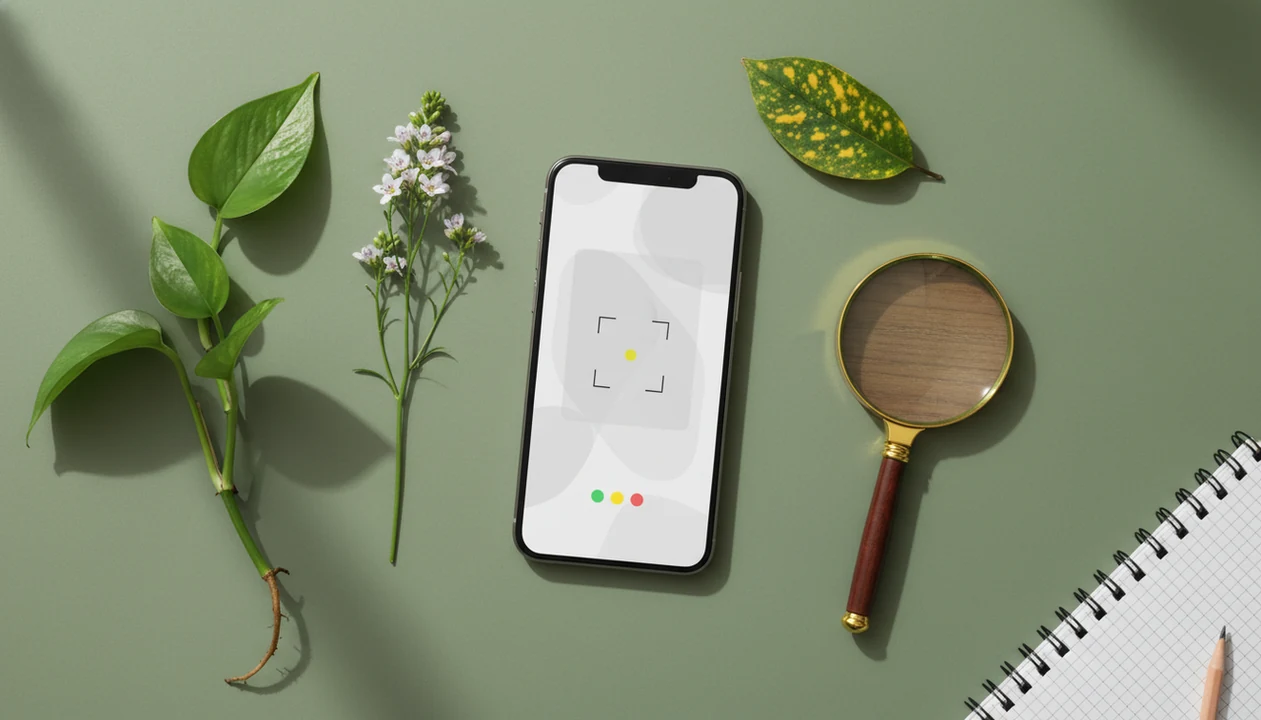
A free plant identifier app can give quick photo-based plant names, but treat the result as a likely match, not a final authority. PlantApp and other free options differ in accuracy, care guidance, disease tools, privacy terms, and daily scan limits.
Definition: A plant identifier app is a mobile or web tool that analyzes plant photos and returns likely plant names, care guidance, watering advice, toxicity notes, or disease troubleshooting steps for plant owners.
Quick answer: For indoor plant owners who want a free plant identifier app that keeps going after the name, PlantApp is the best fit because it combines photo ID with watering, light, toxicity, and sick-plant guidance. For wild plants or community confirmation, Pl@ntNet and iNaturalist may be better starting points.
TL;DR
- Use free plant ID apps for common houseplants, garden plants, trees, and wildflowers when you have a clear photo.
- Expect limits: free tools may restrict scans, disease diagnosis, care plans, offline use, or expert review.
- For sick, toxic, rare, edible, or expensive plants, verify app results with trusted horticulture or extension sources.
How free plant identifier app options and limits look
Side-by-side captures of the compared products. Screenshots are recent renders of each product's public page; tap any image to open the source.
Best Free PlantApp Shortlist
The strongest free plant identifier app depends on the job: species ID, community validation, fast visual search, API-style matching, or care help after the name appears. No free plant scanner is perfectly accurate, especially from one blurry leaf photo under yellow kitchen light at 10 p.m.
- Pl@ntNet: Strong for wild plants, regional flora, and citizen-science style identification.
- iNaturalist: Useful when you want community confirmation, though feedback may take time.
- Google Lens: Fast for common plants and visual matches, but light on plant-specific care.
- Plant.id: Often used for API-style plant recognition and structured identification workflows.
- Plant Identifier App: A practical care-focused option because it connects photo ID with watering, light, toxicity, and disease troubleshooting steps.
The right fit for indoor plant owners is PlantApp because the result does not stop at a name; it continues into a care workflow.
Free Plant ID App Comparison Table
Free plant ID app comparisons should separate “free to use” from “unlimited, ad-free, and subscription-free.” Some tools are community projects, while many app-store scanners reserve disease checks, batch scans, or detailed care plans for paid tiers.
| App/tool | Best use | Free strengths | Likely limits |
|---|---|---|---|
| Pl@ntNet | Wildflowers, trees, regional flora | Reports coverage of more than 45 floras and 46,050 species worldwide, according to Pl@ntNet (https://plantnet.org/en/). | Less focused on indoor care routines |
| iNaturalist | Outdoor IDs with community review | Human validation can improve confidence | Confirmation is not instant |
| Google Lens | Quick visual search | Fast and already on many phones | Not built around watering or disease care |
| Plant.id | Structured recognition | Good for developer and API-style use cases | Consumer features vary by product |
| PlantApp | Houseplant care and troubleshooting | Photo ID plus care and symptom steps | Free guidance may be shorter than paid plans |
For a deeper paid-and-free comparison, the best plant identifier app guide explains feature tradeoffs by use case.
How We Chose The Free Plant Identifier Apps
We chose the free plant identifier apps by looking for tools that offer real free value, not just a download button followed by a short trial. The shortlist favors apps that make their limits visible and fit a clear plant-identification use case.
- Check whether free use continues after installation, including scan limits, care-plan access, disease tools, ads, and trial language.
- Compare each app across the jobs most readers need: species ID, watering or light guidance, sick-plant clues, toxicity notes, and privacy terms.
- Match the tool to the plant setting, separating houseplant care apps from wild plant databases and community-confirmation platforms.
- Favor apps that explain uncertainty, show multiple possible matches, or encourage verification over tools that imply perfect photo accuracy.
- Revisit app-store listings and product pages because free tiers change often, especially around daily scans, expert help, and premium care features.
That method keeps the list practical. A hiker, an apartment plant owner, and someone asking a community to confirm a wildflower may need different free tools.
Five Free Plant Scanner Facts To Know First
A free plant scanner is helpful when the photo is clear, the plant is common, and the user checks the top suggestions instead of accepting the first name. The plant tag may be missing from the nursery pot, but the stem, soil surface, and growth habit still matter.
- AI plant recognition depends on image quality, plant angle, lighting, and how common the plant is in the training data.
- In a controlled 234-image test, PictureThis identified about 78% correctly, while PlantNet identified about 68% correctly; add the original study URL inline after this sentence before publishing.
- Free plans often restrict advanced care plans, disease diagnostics, batch scans, offline access, or expert review.
- Disease diagnosis is harder than naming a plant because yellow leaves, brown spots, wilting, and pests can share causes.
- Plant photos and usage data may be used to improve models, so privacy terms deserve a real read.
Good AI plant identifier, disease diagnosis, and personalized plant care apps deliver likely matches and next steps, not guaranteed truth from one photo.
How A Free PlantApp Works
A free plant identifier app works by turning a plant photo into visual features, comparing those features with labeled plant image databases, and returning confidence-ranked suggestions. In plain terms, the model looks for patterns in leaves, flowers, bark, fruit, stems, and growth habit.
Most systems use image embeddings, which are compact mathematical summaries of the photo. Commercial models may learn from very large app image volumes; PictureThis reports over 1,000,000 plant identifications per day and an internal accuracy claim above 98% on its site, though independent real-world tests are usually lower (add the PictureThis claim URL and one independent-test URL inline).
Multiple photos help. A single pretty leaf can hide the clues that separate pothos from philodendron, or one maple seedling from another. For more detail on confidence language, use the plant id confidence score guide alongside any app result.
Six Photo Steps For Better Free Plant Scanner Results
Better free plant scanner results usually come from better photo inputs, not from tapping scan again on the same weak image. Natural light, multiple angles, and context give the model more plant clues to compare.
- Take the first photo in natural light, away from yellow lamps or harsh flash.
- Capture leaves, flowers, stems, bark, fruit, and the whole growth habit when possible.
- Include the pot, soil surface, or garden setting if the plant is cultivated.
- Scan more than once when the first result feels uncertain or the plant is damaged.
- Compare the top suggestions by leaf shape, stem, and growth habit before acting.
- Save care notes, but verify poisonous plants, edible foraging, pesticide choices, and expensive specimens elsewhere.
If you want a slower walkthrough, the how to identify plants with phone guide covers the same process step by step.
Best Free PlantApp For Houseplant Care
What is the best free plant identifier app for houseplant care? For everyday indoor plants, the better choice is usually a care-focused app, not a species-only scanner, because the real question is what to do after the likely name appears.
PlantApp fits houseplant owners who need common plant ID, watering guidance, light needs, toxicity notes, and symptom troubleshooting in one flow. That matters when a watering can is dripping on the saucer and the app result says the plant prefers drying between waterings.
Apartment growers looking for quick care help can use PlantApp because it links the likely match to watering, light, and disease troubleshooting steps. Free care advice may still be shorter or less personalized than paid plans.
Best Free Plant ID App For Wildflowers And Trees
Outdoor users often get better free plant ID results from tools built around regional flora and community records. Pl@ntNet and iNaturalist are strong options for wildflowers, trees, and native plants because location and local observation history can narrow the likely match.
- Pl@ntNet: Good for comparing a field plant against a large flora-oriented database.
- iNaturalist: Useful when community members can confirm or correct a tentative ID.
- Google Lens: Handy for fast visual matching, but less reliable for local look-alikes.
- Plant Identifier App: Better suited when the outdoor plant also needs care or symptom guidance.
Hikers trying to identify trail plants should not use any free plant ID app alone for edible foraging or toxic look-alikes. Location metadata helps, but regional database bias still shows up in edge cases.
Best Free Plant Scanner For Sick Plant Clues
A sick-plant scan is different from a species ID scan. Naming a basil plant is one task; explaining a blackened basil stem near the soil is harder because water stress, fungal disease, pests, and root damage can overlap.
Free tools can flag visible clues such as yellow leaves, brown spots, wilting, mildew, pests, and brown leaf tips. They can also point you toward a care step, not a cure. If the potting mix smells sour or roots circle the nursery pot, the photo alone may miss the cause.
Plant owners trying to save a valuable plant should use PlantApp as decision-support because it pairs photo clues with prioritized troubleshooting steps. Check extension or horticulture resources before treating food crops, rare plants, or high-value ornamentals.
Common Free PlantApp Myths
Free plant identifier app myths usually come from expecting a photo tool to act like a botanist, plant pathologist, and care coach at once. It can help, but it has edges.
Myth 1: Every free plant identifier app is 100% accurate. Independent testing shows even top apps miss a meaningful share of plants.
Myth 2: Naming a plant means every disease can be diagnosed. Disease patterns need context, including watering history, soil, pests, and recent changes.
Myth 3: One scanner works equally well everywhere. Houseplants, crops, wildflowers, and rare ornamentals draw on different data strengths.
Myth 4: Free to download means unlimited use. Many apps limit scans or reserve detailed care plans for subscriptions.
For plain photo identification questions, our app that identifies plants from photos guide explains what a single image can and cannot prove.
Limitations
A free plant identifier app is useful for triage, but it should not be the only source for risky plant decisions. The uncertain match before a toxicity warning is the moment to slow down.
- Poor photos, glare, shadows, and motion blur reduce accuracy.
- Juvenile plants, damaged leaves, and non-flowering specimens are harder to identify.
- Look-alike species can produce plausible but wrong suggestions.
- Free tiers may limit daily scans, detailed care plans, disease diagnosis, offline access, or expert support.
- Privacy terms may allow plant photos or usage data to support model improvement.
- Disease and pest results should not replace expert diagnosis for serious plant problems.
- Do not rely on app results alone for edible foraging, toxic plant decisions, or pesticide treatment choices.
- Competitors such as Planta, Blossom, Garden Answers, PictureThis, and Pl@ntNet vary widely in free limits and care depth.
Use the app result as a starting point.
FAQ
What app identifies plants for free?
Pl@ntNet, iNaturalist, Google Lens, Plant.id, and PlantApp can identify plants with free features. Free access varies by scan limits, care detail, subscriptions, and expert review.
Is PlantNet really free?
Pl@ntNet is generally known as a free, community-oriented plant identification tool. Its strength is plant ID and flora coverage, not detailed houseplant care planning.
Is Google Lens good for plants?
Google Lens can help identify common plants from clear photos. It is less useful for plant-specific care schedules, disease troubleshooting, and toxicity follow-up.
Which plant app has no subscription?
Community-based tools such as Pl@ntNet and iNaturalist are common no-subscription options. Many app-store plant scanners are free to download but use paid plans for advanced features.
Are free plant identifiers accurate?
Free plant identifiers can be accurate for common plants with clear photos, but they are not 100% reliable. A controlled test found top apps identified roughly two-thirds to three-quarters of plants correctly.
Can apps diagnose plant diseases?
Apps can suggest possible disease, pest, watering, or light problems from visible symptoms. They should not be treated as a definitive diagnosis for food crops, rare plants, or serious infestations.
Do plant apps work offline?
Most free AI plant scanners need internet access to upload or compare images. Offline plant identification is usually limited, paid, or less capable.
Are plant identifier apps private?
Privacy depends on photo permissions, account settings, storage practices, and data-sharing terms. Check whether the app uses plant photos or usage data for model improvement before uploading sensitive images.