
Identify Plant by Bark, Leaves, Buds, and Growth Habit
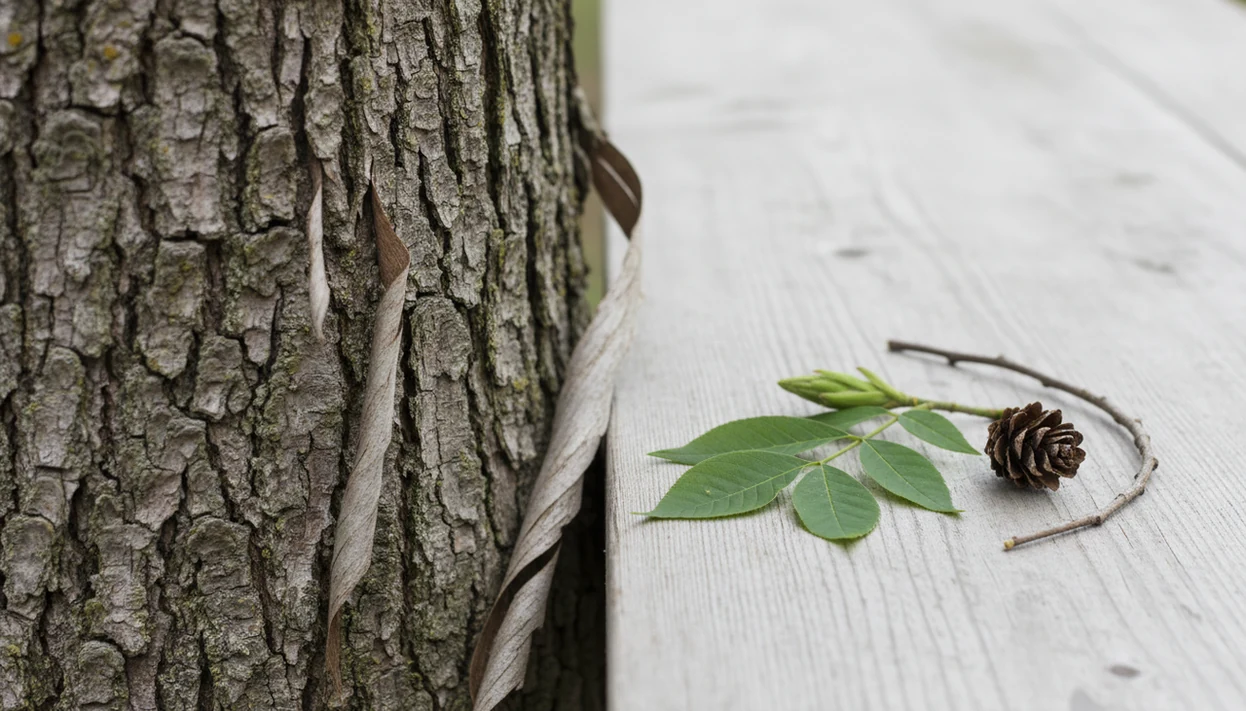
You can identify plant by bark most reliably when you treat bark as one clue, not the whole answer. Photograph bark texture, color, cracks, and peeling patterns, then add leaves, buds, twigs, whole-plant shape, and location to improve confidence.
Definition: Bark-based plant identification means using the outer stem or trunk surface of a woody tree or shrub, including its color, texture, pattern, and damage marks, alongside other field clues to narrow the species.
TL;DR
- Bark is useful for tree bark identification, especially in winter, but it rarely proves a species by itself.
- The best bark identifier app results come from multiple photos: close bark, whole tree, leaves or buds, twigs, fruit, and habitat.
- Bark changes with age, stress, disease, pruning, and environment, so young plants and damaged trunks are easier to misidentify.
Tree Bark Identification Clues and Limits
Bark-based identification works by comparing color, texture, crack pattern, plates, ridges, scales, lenticels, peeling, and trunk markings against known woody plants. It is strongest for trees and shrubs, and much weaker for soft herbs and many indoor plants.
Winter is the classic use case. Leaves are gone, flowers are absent, and a sun-faded nursery tag may be unreadable or long tossed with the sleeve. In that moment, bark can help narrow the field.
Texas A&M Forest Service teaches tree identification as a multi-feature process using form, habitat, bark, leaves, and leaf arrangement, not one clue alone source. For bark-first searches, the safest answer is a likely match, then a check against buds, twigs, branching, and range.
Before You Identify a Plant by Bark
Before you identify a plant by bark, make sure bark is actually a useful clue. This works best on woody trees and shrubs, not soft green stems, vines with little wood, or most leafy houseplants.
- Check the stem first to see whether it has real woody growth, mature bark, or repeated trunk texture worth comparing.
- Use natural light and wipe your phone lens before shooting; add a coin, ruler, glove, or finger nearby for scale without covering the pattern.
- Record the setting while you are still there: location, season, approximate height or trunk width, nearby water, woods, lawn, street planting, or garden bed.
- Look around the plant for leaves, buds, twigs, cones, fruit, flowers, seed pods, or fallen material under the canopy.
- Avoid risky handling if the plant may be toxic, thorny, storm-damaged, unstable, or growing near traffic or power lines.
Those few notes often separate two bark look-alikes before the app or field guide even starts.
Five Bark Identifier App Facts That Improve Accuracy
- Bark-only identification can work for some trees, but confidence rises with leaves, buds, twigs, form, and habitat. For winter trees, fallen leaves under the canopy still count as useful evidence.
- Close and mid-range bark photos answer different questions. Close shots show texture; mid-trunk photos show whether ridges, plates, or peeling repeat.
- Bark changes as trees age. A sapling may look smooth even when the mature tree becomes furrowed, plated, or shaggy.
- Bark identification fits woody trees and shrubs better than soft plants. If the plant is a pothos or basil, switch to leaves, stems, and flowers instead.
- A good bark identifier app should combine AI recognition with location, season, and reference-key style prompts. Good ai plant identification, disease diagnosis, and personalized plant care app for houseplants and garden plants deliver likely matches and next care steps, not guaranteed species proof from one bark photo.
Plant Bark Identification Technology Workflow
Plant bark identification technology works by turning visible bark patterns into image features, then comparing those features with training examples and reference traits. In AI terms, image embeddings group similar textures, colors, and shapes; in plain language, the system looks for visual neighbors.
How it works: the model should weigh multiple images plus context, including region, season, plant size, leaf arrangement, buds, fruit, and overall form. A macro shot of striped leaf veins beside the bark can change the likely match fast.
Bark scans can also flag health clues. Cracks, cankers, discoloration, decay, holes, and unusual lesions may point toward stress or disease, though that is a care step, not a cure. If symptoms matter, compare bark findings with a plant disease diagnosis app workflow and local extension advice.
Bark Identifier App Photo Workflow
How to use a bark identifier app: build a small photo set before accepting the first result. A photo-based ID tool can help organize the evidence, but the photos still decide how useful the result is.
- Photograph the bark close up in natural light, avoiding blur, glare, and hard shadows.
- Capture the trunk or main stem from several feet away to show ridges, plates, peeling, and repeating pattern.
- Add a whole-tree or whole-shrub photo showing height, crown shape, branching habit, and growing location.
- Include leaves, buds, twigs, cones, flowers, fruit, or fallen material when available.
- Review several likely matches and compare range, habitat, bark age, and confidence before accepting an ID.
Use the result as a working ID, then take a second photo in natural light if the first one was under yellow kitchen light at 10 p.m.
Best Photos for Tree Bark Identification Results
A useful photo set for tree bark identification includes close bark, mid-trunk, trunk base, branching pattern, leaves or buds, fruit or cones, and the whole plant. Close photos alone lose scale; distant photos lose the texture that bark ID depends on.
Close bark: Capture ridges, scales, lenticels, peeling edges, and color changes without filling the frame with shadow.
Mid-trunk: Show whether the pattern is smooth, plated, furrowed, papery, or broken into blocks.
Base and branching: Photograph flare, suckers, low limbs, and crown shape because growth habit separates many look-alikes.
Leaves, buds, fruit, or cones: Add any seasonal clue you can find. If leaves are present, a leaf-first guide can be faster, especially when you need to identify tree by leaf.
If bark shows cracks, cankers, sap, holes, or discoloration, photograph healthy and affected areas separately. Location and season narrow the list more than most users expect.
Bark, Leaves, Buds, and Growth Habit Comparison Clues
Multi-feature identification is stronger because no single clue stays reliable across every age, season, and region. The Arbor Day Foundation notes that over 850 tree species are native to North America, which makes bark, leaves, twigs, fruit, and form important together source.
| Clue | What it helps identify | Main weakness |
|---|---|---|
| Bark | Texture, age traits, winter clues | Many species share similar ridges or color |
| Leaves | Shape, veins, margins, arrangement | Missing in winter or damaged |
| Buds | Winter ID, twig arrangement | Small and easy to photograph poorly |
| Twigs | Opposite or alternate branching | Often overlooked in quick photos |
| Fruit/flowers | Genus or species clues | Seasonal and short-lived |
| Whole-plant form | Crown, height, growth habit | Distorted by pruning or crowding |
| Habitat | Range, moisture, site conditions | Ornamentals may grow outside native range |
Dark ridged bark does not automatically mean oak. Hickory, chestnut, pine, and other trees can look similar at a glance. Reset the guess.
Bark Identification Myths That Cause Wrong Tree IDs
Several bark identification myths lead to confident but wrong tree IDs. The biggest is that any tree or shrub can be identified 100% from bark alone. Some can be narrowed well, but many need buds, leaves, fruit, and location.
Another myth is that a bark identifier app works equally well on all plants. It does not. Soft houseplants often have no useful bark, so it is usually better to identify houseplant from photo using leaves, stems, pot size, and soil surface.
Bark appearance also changes over time. Young trunks, old trunks, storm scars, pruning wounds, and sunscald can all change the surface. Any dark, ridged trunk is not automatically an oak. And one photo is rarely enough when the plant is rare, hybrid, young, damaged, or growing far outside its typical region.
Limitations
Bark-based identification is useful, but it has real failure points. Use the app result as a starting point, especially when the ID affects safety, pruning, removal, or treatment.
- Bark-only photos can confuse both humans and AI when several species share similar textures or colors.
- Young saplings, pruned shrubs, and potted woody plants may not show mature bark features yet.
- Disease, storm damage, animal damage, pollution, and sunscald can alter bark appearance.
- Regional tree keys may not match exotic ornamentals, hybrids, cultivars, or houseplants.
- Rare species and unusual cultivars may be missing or underrepresented in app training data.
- A cat sniffing a dangling vine is not a bark problem; use pet-toxicity references, not a trunk guess.
- Do not use bark-only identification for edible foraging, toxicity decisions, or safety-critical plant choices.
For uncertain garden plants, combine bark with a broader identify plant from photo process before acting.
FAQ
Can you identify a tree by its bark?
Yes, some trees can be identified or narrowed by bark, especially in winter. The result is more reliable when bark is combined with leaves, buds, twigs, whole-tree form, season, and location.
What bark features should I look at first?
Start with bark color, texture, ridges, flakes, plates, peeling, lenticels, cracks, and unusual markings. Photograph both close detail and the repeating pattern on the trunk.
How accurate is bark identification from a photo?
Accuracy varies by species, photo quality, age of the tree, and available context. Multiple photos usually give better results than one close bark image.
Which trees have peeling bark?
Birch, sycamore, eucalyptus, paperbark maple, shagbark hickory, and some pines can have peeling or shedding bark. Peeling bark occurs in unrelated species, so it should not be used alone.
Can apps identify tree bark?
Yes, bark identifier apps can compare bark photos with visual training examples and return likely matches. These tools work better when you add leaves, buds, twigs, location, and season.
Why does tree bark change color?
Tree bark can change color because of age, weather exposure, moisture, disease, pollution, lichens, algae, and surface wear. Wet bark often looks darker than dry bark.
Can houseplants be identified by bark?
Most houseplants are not good candidates for bark-based identification because they have soft stems or minimal woody growth. Leaves, stems, flowers, growth habit, and pot clues are usually more useful.