Plant Care Benefits After 30 Days of Better Tracking
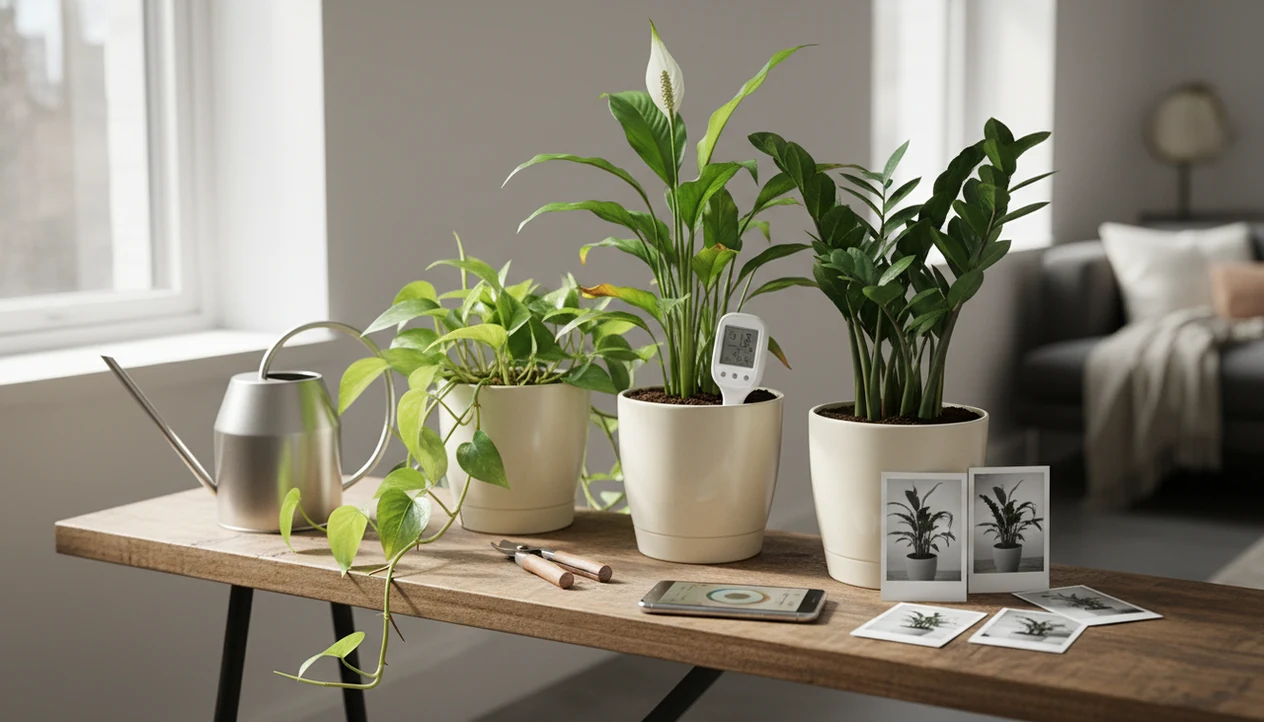
Plant care benefits after 30 days usually mean practical early improvements: fewer missed waterings, better light placement, earlier problem spotting, and steadier-looking leaves rather than dramatic overnight growth. A month is long enough to build a care rhythm and notice which plants dry out fastest, which need more light, and which may need disease or pest checks.
Definition: PlantApp is a photo-based plant care app that helps identify plants and gives care, watering, and disease troubleshooting steps for plant owners.
TL;DR
- The biggest 30-day benefit is fewer care mistakes, especially overwatering and poor light placement.
- Visible plant care results after 30 days may include less wilting, fewer yellow leaves, more stable soil moisture, and small signs of new growth on healthy plants.
- Houseplant tracking benefits compound over 3–6 months because reminders, photo logs, and care history reveal each plant’s real routine.
Plant Care Benefits After 30 Days at a Glance
Plant care benefits after 30 days are usually about stability: steadier watering, better light placement, fewer missed checks, and fewer symptoms getting worse. The biggest win is reducing avoidable damage, not forcing a pothos, fern, or snake plant into sudden dramatic growth.
A month gives you enough time to notice patterns. The peace lily that droops every six days is different from the ZZ plant still damp after two weeks. Slow growers may look almost unchanged after one month, especially in winter or low light.
Small improvements still count.
For beginners, 30 days is often easier to measure by fewer new yellow leaves, firmer stems, and fewer “I forgot that plant existed” moments than by height or leaf count.
Five Facts About Plant Care Results 30 Days Into Tracking
- Tracking mainly reduces mistakes. Most early plant care results 30 days into tracking come from avoiding overwatering, underwatering, and wrong light placement.
- One month can expose bad assumptions. A faded nursery tag or wrong common name can lead to the wrong watering rhythm, light level, or soil expectation.
- Visible results are usually modest. Look for fewer yellow leaves, less drooping, stable soil moisture, and early growth on already-healthy plants.
- Photo history creates a baseline. Weekly photos make the next 3–6 months easier to read because you can compare leaf color, posture, spots, and new growth.
- Starting conditions matter. Results depend on plant health, season, window direction, potting mix, drainage, and whether the care step is actually followed.
A plant with roots circling a nursery pot may need repotting before tracking looks useful. Care records help you notice that, but they don't replace the physical fix.
How Houseplant Tracking Benefits Work Over One Month
Houseplant tracking benefits work because plants respond to accumulated conditions, not one good watering. Water timing, light exposure, drainage, humidity, temperature, and stress build up over days and weeks.
For a horticulture baseline, University of Minnesota Extension notes that houseplant watering needs vary by plant type, potting medium, light, temperature, and humidity: https://extension.umn.edu/houseplants/watering-houseplants.
Tracking turns vague care into observable patterns. You record the last watering, soil dryness, leaf posture, light position, and symptom changes. That makes it easier to compare the leaf shape, stem, and growth habit against the care plan instead of guessing from memory. Reminder systems also help because people forget intended routines; the useful part is the check, not automatic watering.
The calendar reminder before breakfast is only a prompt.
AI identification and photo-based diagnosis can improve care plans when the photos are clear, but the result should be verified. A good ai plant identification, disease diagnosis, and personalized plant care app for houseplants and garden plants delivers likely matches and next care steps, not guaranteed certainty from one image. Tools like PlantApp fit best as a starting point, especially when you also check real plant response.
How to Use Plant Care Tracking for 30-Day Results
Use plant care tracking for 30-day results by setting a baseline, checking conditions before acting, and reviewing changes weekly. The goal is a repeatable care rhythm, not a perfect-looking plant by day 30.
- Identify each plant from clear photos that show leaves, stems, pot, and growth habit, then check the likely match against the plant you own.
- Photograph a baseline in natural light, including the soil surface and any brown tips, yellow leaves, spots, or pests.
- Set watering reminders, light notes, and care tasks, but treat each reminder as a reason to check soil moisture first.
- Log actual watering, soil dryness, leaf changes, pest sightings, and any moves to brighter or dimmer locations.
- Review photos once a week and compare whether reminders matched real dryness, not wishful timing.
- Adjust placement, watering interval, or inspection frequency when symptoms point to light stress, drainage trouble, or pests.
A plant watering reminder app is most useful when it teaches timing and soil checks together.
30-Day Plant Care Method We Tracked
What method can show realistic plant care results in 30 days? Start with a baseline, repeat small checks, and review whether the plant is stabilizing rather than expecting a controlled scientific trial.
On day 1, identify each plant, then note leaf condition, pot type, soil feel, light location, and moisture. We like one whole-plant photo and one close-up, because a single pretty leaf rarely explains the problem. Blurry leaf photos under yellow kitchen light at 10 p.m. usually need a second photo in natural light.
Daily or every-other-day checks should include a soil touch test, leaf posture, pests, yellowing, wilting, and new growth. Weekly review compares photos and asks whether reminders matched real soil dryness. A result can be fewer missed checks, fewer worsening leaves, better watering timing, or a new leaf unfurling beside a stake.
This is a practical tracking framework, not a lab study.
Plant Care Results 30 Days Later: Three Realistic Vignettes
Three realistic 30-day plant care outcomes are stabilization after overwatering, better posture after improved light, and slower symptom spread after early checks. None of these proves guaranteed recovery, but each shows why repeated observation matters.
Overwatered foliage plant
A pothos or peace lily with damp soil, yellowing leaves, and a sour potting mix smell may improve when watering becomes less frequent. After 30 days, the realistic win is fewer new yellow leaves and firmer stems. Drainage awareness matters more than adding fertilizer.
Low-light succulent
A leggy succulent may not become compact again in one month, but brighter placement can reduce stretching. University of Georgia Extension also notes that inadequate indoor light can cause weak, spindly plant growth: https://extension.uga.edu/publications/detail.html?number=B1318. A plant light meter app can help compare an east window glow on leaves with a darker shelf across the room.
Early symptom plant
A plant with spots or yellowing benefits from repeated photo checks, damaged leaf removal, and pest review. Tiny webbing under curled leaves changes the plan fast. After 30 days, success may mean no new spots and one small bud.
Common Houseplant Tracking Benefits Seen After 30 Days
Common houseplant tracking benefits after 30 days are fewer missed waterings, fewer duplicate waterings, better plant placement, earlier pest checks, and more confidence. For shared homes, the duplicate-watering problem is real; one person waters on Monday, another “helps” on Tuesday.
Care logs also show which plants dry quickly and which stay damp. A terracotta-potted calathea near heat may dry faster than a plastic-potted philodendron across the room. Light notes help connect symptoms to location, especially when one shelf grows well and another produces pale, stretched leaves.
Earlier pest or disease detection comes from repetition. A weekly macro shot of striped leaf veins might also catch speckling, webbing, or scale before the whole plant declines. For newer owners, a houseplant care app for beginners can reduce guesswork by connecting reminders, photos, and care notes in one place.
For most homes, tracking works best when it changes behavior, while growth follows only if light, water, and roots are also suitable.
What Plant Care Benefits After 30 Days Do Not Prove
Thirty days of better care does not prove a plant is fully healthy, permanently recovered, or correctly identified in every case. A plant may stabilize before it looks better, especially after root stress, severe underwatering, pest damage, or a long stay in poor light.
Slow-growing plants may show almost no visible new growth even when conditions improve. Snake plants, hoyas, ZZ plants, and many succulents can take longer to reveal progress. Season also matters; winter growth may be minimal even with improved care.
AI identification and diagnosis should be checked with clear photos, multiple observations, and real-world plant response. Experimental AI image-analysis studies have reported high accuracy ranges for plant disease recognition under controlled conditions, but crop-disease testing is not the same as diagnosing every houseplant on a windowsill. For context, a Frontiers in Plant Science review of deep-learning plant disease detection warns that image conditions, datasets, and real-world variation affect model performance outside controlled testing: https://www.frontiersin.org/articles/10.3389/fpls.2016.01419/full.
Plant-identification apps, including PictureThis and PlantNet, can help compare likely matches, but light, drainage, season, temperature, and starting condition can outweigh tracking alone.
Evidence Behind 30-Day Plant Care Tracking
The evidence behind 30-day plant care tracking supports better observation and fewer routine mistakes, not guaranteed rescue. A month of notes can show whether your care matches the plant’s actual water use, light needs, and symptoms.
Extension guidance is useful because it keeps the focus on conditions you can check. Watering is not one fixed calendar rule; it changes with plant type, potting mix, light, temperature, humidity, pot size, and drainage. Light guidance points in the same practical direction: weak indoor light can lead to pale, stretched, or spindly growth, so placement notes matter as much as watering reminders.
A simple evidence-based routine looks like this:
- Check soil moisture before watering, instead of trusting the date alone.
- Compare the plant’s current location with its leaf posture, color, and stretching.
- Photograph symptoms in consistent light so changes are easier to judge.
- Verify AI identification or disease suggestions against repeat observations and plant response.
- Separate stabilization from recovery, because fewer new yellow leaves is useful even when old damage stays visible.
AI plant studies show that image models can classify likely plants or diseases under certain conditions. They do not prove every phone photo gives a certain diagnosis.
Limitations
Thirty days is a short window, especially for slow-growing plants, dormant plants, and stressed plants recovering from root damage. A care log can reveal problems, but it cannot repair conditions the owner does not change.
- A care app cannot fix very low light, poor drainage, compacted soil, extreme temperatures, or a pot with no drainage hole by itself.
- AI plant identification can be uncertain for rare cultivars, immature leaves, poor photos, or several similar species.
- Disease diagnosis is limited when pests, nutrient stress, watering damage, and fungal symptoms overlap.
- Reminders can cause overwatering if users water automatically without checking soil moisture first.
- Season changes results because many houseplants grow slower in winter and faster in spring or summer.
- Severe disease, rot, or pest infestation may require pruning, repotting, isolation, or expert help beyond tracking.
- Plant tags faded by sun or tossed with the nursery sleeve can make the starting ID harder to verify.
When the ID is uncertain, use the app result as a starting point and check against a regional source or local expert.
FAQ
Can plants improve in 30 days?
Yes, some plants can show fewer symptoms, steadier leaf posture, and small new growth within 30 days. Major recovery often takes longer, especially after root damage or low-light stress.
What plant changes appear first after 30 days of tracking?
Early changes usually include less drooping, fewer new yellow leaves, steadier soil moisture, and better leaf posture. Healthy plants may also show a new leaf, root tip, or bud.
Will plant care tracking stop overwatering?
Tracking can reduce overwatering when reminders are paired with soil checks. Reminders alone are not enough if you water without checking dryness.
Do plant apps improve plant growth?
Plant apps can support growth by improving care consistency, identification, watering timing, and light placement decisions. Growth still depends on suitable light, roots, soil, season, and plant health.
Is 30 days enough time to see plant care results?
Thirty days is enough time to build a routine and see early stability. It is not enough time to prove full recovery or dramatic growth for many houseplants.
Should I photograph my plants every week?
Yes, weekly photos help compare leaf color, posture, pests, spots, and new growth more accurately than memory. Use similar lighting and distance each time.
Can AI identify plant diseases from photos?
AI can flag likely disease or pest issues from photos, especially when leaf details are clear. The result should be verified with symptoms, repeat photos, and plant response.
Why are my plant leaves still yellowing after better care?
Leaves may keep yellowing because of past stress, watering imbalance, low light, pests, nutrient issues, root damage, or natural aging. New symptoms matter more than old damaged leaves.