
Plant Care Year One Timeline for New Houseplant Owners
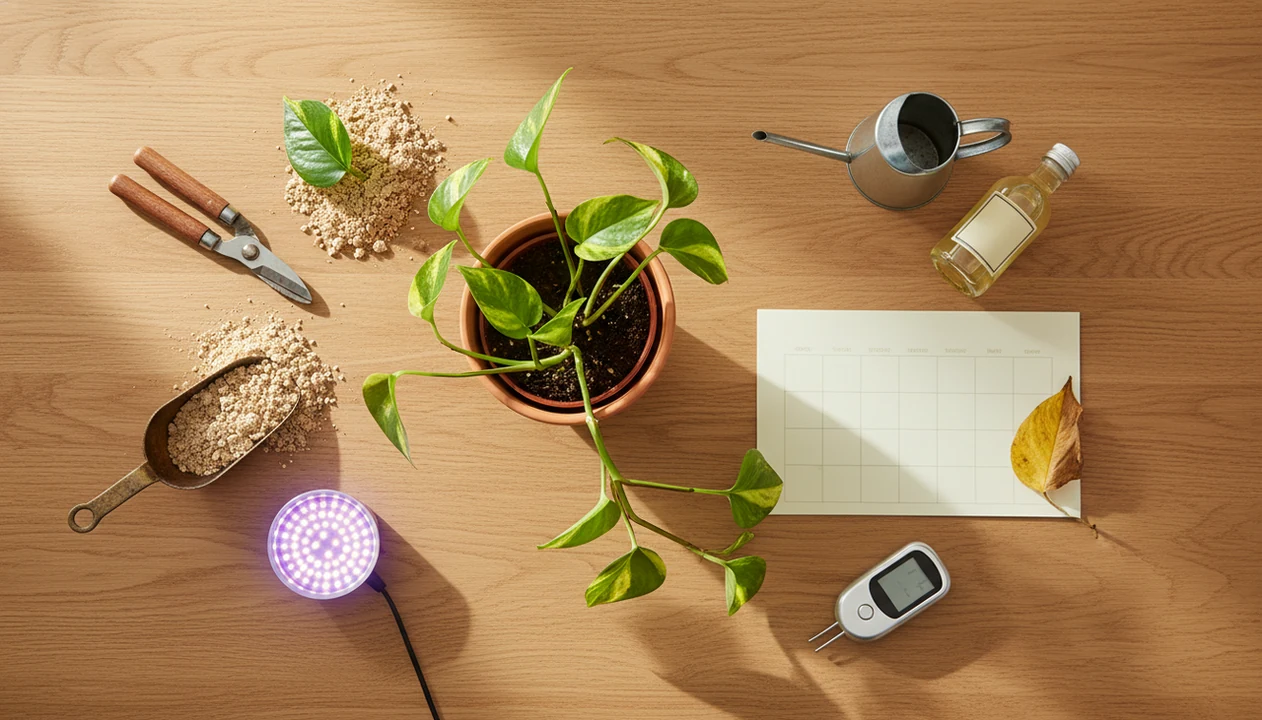
Plant care year one is a seasonal timeline for helping a new houseplant acclimate, avoid overwatering, grow during spring and summer, and slow down safely in fall and winter. Start by identifying the plant, checking soil before watering, watching stress signs weekly, and only repotting when roots or drying patterns prove it needs more room.
Definition: PlantApp is a photo-based plant identification and care app that helps users identify houseplants and review watering, light, and visible disease troubleshooting guidance.
TL;DR
- The first two weeks are for identification, quarantine, light placement, and observation rather than fertilizing or repotting.
- Water by soil dryness and plant type, not a fixed weekly schedule, because overwatering and poor drainage are the biggest first-year risks.
- Spring and summer usually mean more growth, water, and fertilizer; fall and winter usually mean less water, little fertilizer, and closer light checks.
Plant Care Year One Timeline at a Glance
The houseplant first year is a cycle of acclimation, root establishment, seasonal adjustment, and symptom tracking. A simple plant care year one plan keeps you from reacting to every yellow leaf with a new fix.
Use this roadmap: first 2 weeks for ID, quarantine, and observation; months 1 to 3 for watering rhythm; spring and summer for growth support; fall for slowing fertilizer and water; winter for maintenance and light checks; months 6 to 12 for a repotting review.
Exact timing changes by species, pot size, window direction, humidity, and local climate. A fern on a humid bathroom shelf after a shower behaves differently from a succulent near a dry south window.
Small clues matter.
Five Plant Care Timeline Facts New Owners Should Know
- Correct identification comes first because light, water, temperature, and dormancy needs change by species, not just by leaf color. - Overwatering and poor drainage are among the most common first-year risks for indoor container plants because wet roots also need oxygen. - For many common houseplants, check the top 2 to 5 cm, or 1 to 2 inches, of soil before watering instead of choosing one fixed calendar day. For general indoor-plant watering and drainage guidance, see University of Minnesota Extension’s houseplant care guide: https://extension.umn.edu/product-and-houseplant-pests/houseplant-care. - Spring and summer are usually active growth periods, so plants may need more water and label-directed fertilizer; fall and winter usually require less. - Repot only when rootbound, then move up one pot size rather than dropping a small root ball into a much larger wet container.
Yellowing leaves, drooping, pests, leaf spots, mold, and soft stems should be inspected before changing several care variables at once. One blurry leaf photo under yellow kitchen light at 10 p.m. rarely tells the whole story.
How a Houseplant First Year Works Indoors
A houseplant’s first indoor year is shaped by acclimation shock, light-driven photosynthesis, root oxygen, and the microclimate around the pot. In plain terms, the plant is adjusting to a new room while trying to make enough energy to maintain leaves and roots.
Plants often move from bright, warm grower conditions to a store, then to a home. That shift can cause drooping or leaf drop. Light drives photosynthesis, and photosynthesis controls growth rate and water use. In darker rooms, soil may stay wet longer because the plant is using less water.
Roots need moisture and air. Soggy potting mix can push oxygen out of the root zone, which stresses roots and raises disease risk. Many common indoor foliage plants are managed near 18 to 24 °C, or 65 to 75 °F, but cold windows, heaters, AC vents, and dark corners change the plant’s real conditions. University of Georgia Extension also lists 65 to 75 °F as a typical indoor foliage-plant temperature range: https://extension.uga.edu/publications/detail.html?number=B1318.
The windowsill is not one climate.
How to Use a Plant Care Year One Calendar
A plant care calendar works as a decision tool, not a rigid watering schedule. Use it to check the plant, then decide what the plant actually needs that week.
- Identify the plant from clear photos of the leaves, stem, pot, and soil surface, not just one attractive leaf.
- Choose a light location that matches the likely species, then adjust if leaves stretch, scorch, or stall.
- Test soil moisture with a finger, wood skewer, or moisture meter before watering.
- Log watering dates, soil dryness, and drainage so patterns become visible after a month.
- Inspect leaves weekly for yellowing, pests, spots, webbing, mold, or brown tips.
- Reset care seasonally when light, room temperature, and growth speed change.
Tools like PlantApp, PictureThis, or Planta can help confirm a likely species and visible symptom pattern, but the result should be checked against the real pot, roots, and room.
First Two Weeks of New Houseplant Care
What should you do first after bringing home a new houseplant? Identify it, inspect it, place it carefully, and avoid major changes unless the plant has an urgent problem.
Start with the plant name. A faded nursery tag or tossed plastic sleeve can leave you guessing, and care changes quickly between pothos, calathea, cactus, orchid, and fern. Inspect leaf undersides, stems, soil surface, and drainage holes for pests, spots, mold, soft tissue, or damage.
Place most common tropical foliage plants in bright indirect light unless the species needs something different. Quarantine the newcomer from other plants when possible, especially if you see webbing, sticky residue, or tiny moving dots.
Avoid fertilizer during this period. Avoid repotting too, unless there is sour soil, no drainage, severe root crowding, or active rot. A few dropped leaves can be normal acclimation; collapsing stems in wet soil are more concerning.
Months One to Three Houseplant First Year Routine
Months one to three are for learning the plant’s rhythm. Watering should respond to soil moisture, pot size, drainage, plant type, and light level.
For many common houseplants, let the top 2 to 5 cm, or 1 to 2 inches, of mix dry before watering. If a wooden skewer comes out cool, dark, and flecked with damp mix, wait; if it comes out mostly clean and dry, the pot is closer to ready. Then water thoroughly and empty saucers or cachepots so roots are not sitting in standing water. A clear nursery pot showing pale roots can also show whether roots are healthy or circling.
Yellow leaves are not a diagnosis by themselves. They can point to overwatering, underwatering, low light, pests, nutrient issues, or normal aging of older leaves. Change one variable at a time, then wait. If you move the plant, repot it, fertilize it, and water it more in the same week, you lose the trail.
A plant watering reminder app is most useful when reminders are paired with a soil check.
Spring and Summer Plant Care Timeline for Growth
Spring and summer usually bring faster growth because light intensity and day length increase. Many houseplants use more water during this period, but the soil should still justify each watering.
Check soil more often as new leaves appear. Fertilize monthly or according to the label for suitable species during active growth, but skip heavy feeding for stressed plants, newly repotted plants, or species with different seasonal needs. Low-light placement can sharply reduce photosynthesis and stunt visible growth, especially for foliage plants sold for bright indirect rooms.
Rotate pots so growth does not lean hard toward one window. Prune dead or badly damaged leaves with clean scissors, and inspect new growth for pests. New leaves are tender. Aphids and mites notice.
Cacti, ferns, orchids, aroids, and tropical foliage plants do not follow one identical calendar. For darker rooms, a plant light meter app can make placement decisions less guessy.
Fall and Winter Plant Care Timeline for Slow Growth
Fall and winter care usually means less water, less fertilizer, and more attention to light. Reduced daylight and cooler room temperatures slow growth, so many indoor plants use substantially less water than they did in summer.
Check soil before watering, even if the plant was on a reliable summer rhythm. Some plants may dry slowly for weeks in a cool, dim room. For most common houseplants, reduce or pause fertilizer during low-growth months unless the plant is actively growing under strong light.
Move plants away from heaters, cold drafts, and AC vents. A plant beside a radiator may have crispy leaf edges, while one touching a cold window may show chilled, damaged leaves. Humidity-sensitive plants, including some ferns and calatheas, may need closer monitoring, but there is no universal humidity target for every houseplant.
If growth stretches or fades, test a brighter winter spot or a grow light clipped to a bookshelf.
Repotting Checks in the First Plant Care Year
Should you repot a new houseplant during the first year? Not automatically; repot when the roots, soil behavior, or plant health show that the current container is failing.
Rootbound signs include roots circling the pot, roots exiting drainage holes, water running through too fast, soil drying unusually fast, and stalled growth despite steady light and watering. If repotting is needed, move up only one pot size. A practical rule is to choose a pot about 2 to 5 cm, or 1 to 2 inches, wider than the root ball.
Oversized pots hold wet mix around roots that cannot use it yet. That can create the same soggy conditions beginners were trying to escape. Emergency repotting is different. Act sooner if the pot has no drainage, the mix smells sour, roots are black and mushy, or the medium is pest-infested.
For step-by-step beginner routines, a houseplant care app for beginners can help separate repotting signals from normal adjustment.
Three Year-One Plant Care Stories and Patterns
Photo-based identification and disease diagnosis can guide the next step, not replace observation. Good AI plant identifier, disease diagnosis, and personalized plant care app for houseplants and garden plants deliver likely matches and care priorities, not guaranteed species confirmation or emergency plant health certainty.
Maya's overwatered pothos
Maya scanned a pothos after seeing drooping stems despite wet soil. The likely pattern was excess moisture, so she checked drainage, emptied the cachepot, moved it to brighter indirect light, and waited before watering again.
Leo's low-light ZZ plant
Leo’s ZZ plant looked alive but had no new growth for months. After identifying it, he moved it from a dark hallway to brighter indirect light and changed nothing else for three weeks.
Nina's spotted calathea
Nina photographed spotted calathea leaves, then inspected the undersides and soil. The next step was not panic repotting; it was isolating the plant, checking for pests, reviewing water quality, and monitoring new leaves.
For beginners, one careful adjustment is often easier than a full reset because it shows what actually helped.
Evidence and Sources for the First-Year Plant Care Timeline
The first-year timeline is grounded in extension-style guidance for drainage, soil-moisture checks, light, and typical indoor temperature ranges, then softened with observation-based beginner rules. Treat the calendar as a way to notice patterns, not as proof that every plant needs the same action in the same week.
- Separate the firm rules from the habits. Drainage holes, avoiding standing water, matching light to species, and keeping many foliage plants near normal room temperatures are evidence-backed basics; “check every Sunday” or “wait one more day if unsure” are beginner heuristics.
- Connect seasonal changes to mechanisms. More light usually increases photosynthesis, growth rate, and water use, while dim winter rooms slow growth and let soil stay wet longer.
- Adjust for plant groups. A cactus, fern, orchid, calathea, and pothos can all live indoors, but their roots, leaf texture, and native growing patterns make one calendar too blunt.
- Verify unusual cases with local help. Consult your regional extension office, a reputable nursery, or a horticulturist when a plant is valuable, symptoms spread fast, pests are unclear, outdoor-to-indoor timing depends on climate, or the ID is uncertain.
Limitations
A first-year plant care timeline is useful, but it cannot make every plant behave the same way.
- Species needs vary widely among cacti, succulents, aroids, ferns, orchids, palms, and flowering plants.
- Seasonal guidance assumes typical temperate indoor conditions and may differ in tropical, desert, or very dark climates.
- AI plant identification and disease diagnosis work best with clear, well-lit photos and can still misidentify rare or similar species.
- Some plants arrive already stressed, rootbound, overwatered, underwatered, or pest-infested before the owner buys them.
- Fertilizer, humidity, and watering recommendations are not equally supported by controlled trials for every houseplant species.
- No timeline can guarantee survival if light, drainage, temperature, or disease problems remain unresolved.
- Toxicity and pet-safety questions need extra caution, especially after a chewed leaf tip on a prayer plant or paw prints in damp potting soil.
Use the app result as a starting point, then check against a regional source when the ID is uncertain.
FAQ
How often should I water a new houseplant?
Water a new houseplant when its soil dryness, species, light level, pot size, and drainage show it needs water. Many common houseplants should be checked when the top 1 to 2 inches of soil feel dry.
Should I repot a houseplant right after buying it?
Immediate repotting is usually unnecessary unless the plant has no drainage, severe root crowding, sour soil, root rot, or pests in the potting mix. Most new plants benefit from observation first.
When should I fertilize a houseplant in its first year?
Most houseplants are fertilized during active spring and summer growth. Avoid heavy fertilizer during winter slowdown or while the plant is stressed.
Why are my new houseplant's leaves turning yellow?
Yellow leaves can come from overwatering, underwatering, low light, pests, nutrient problems, temperature stress, or normal old-leaf aging. Check roots, soil moisture, and leaf undersides before changing care.
Do houseplants need less water in winter?
Most houseplants need less water in winter because lower light and slower growth reduce water use. Always check the soil rather than keeping a summer schedule.
How much light is enough for a new houseplant?
Many common houseplants prefer bright indirect light, but low-light tolerance depends on the species. Correct identification helps you choose a window, shelf, or grow light location.
Can a dying houseplant recover in the first year?
A dying houseplant can recover if the roots are still viable, some healthy tissue remains, and the main problem is corrected quickly. Recovery is less likely when rot, pests, or severe dehydration have spread through most of the plant.
Can an app identify houseplant problems from a photo?
An app can help identify the plant and visible symptoms from photos, including leaf spots, pests, or watering stress. PlantApp results should be checked against soil moisture, roots, light, and room conditions.