
Repotting Timeline For Houseplants After You Identify Them
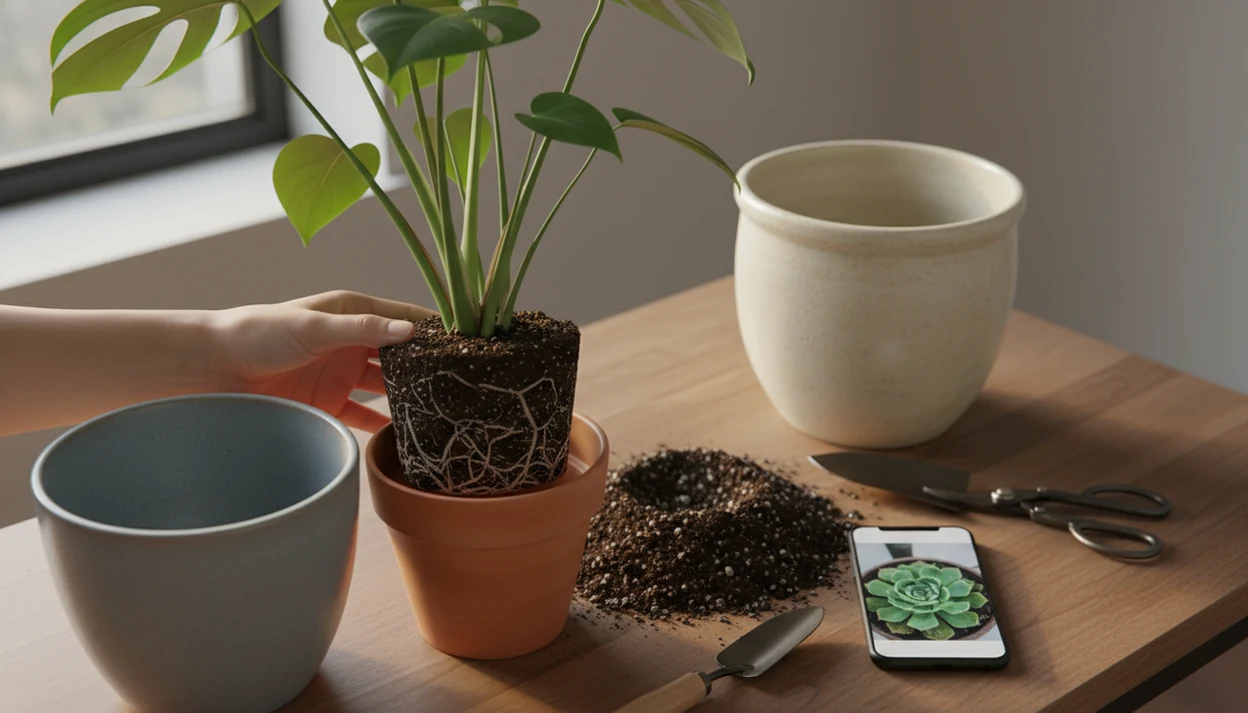
A repotting timeline should start with the plant’s identity, then adjust for root crowding, growth rate, season, soil condition, and pot size. Most houseplants need repotting about every 1–2 years, but visible cues matter more than a fixed calendar.
> Definition: A repotting timeline is a plant-specific schedule and decision system for knowing when to move a houseplant into fresh potting mix or a slightly larger container.
TL;DR
- Repot most common houseplants every 1–2 years, but only sooner if roots, soil, or growth show clear stress signs.
- Late winter through spring is usually the safest repotting window because plants are entering active growth.
- Move up gradually, usually 1–3 inches wider, because oversized pots can keep soil wet and raise root rot risk.
Repotting Timeline Definition After Plant Identification
A repotting timeline is not a rigid annual calendar. It is a plant-specific decision plan based on what the plant is, how fast it grows, and what its roots and potting mix are doing.
Species identity changes the timing, the pot size jump, and how much risk you should take. A pothos with roots circling a nursery pot can outgrow its space quickly. A snake plant may sit tight for longer and still look fine. We often see the problem start with a faded plant tag or one tossed with the nursery sleeve.
If the plant tag is missing, use photo identification only as a starting point. Confirm the result against leaf shape, stem structure, growth habit, and the way the plant actually behaves before choosing a repotting schedule.
Five Repotting Schedule Facts For Indoor Plants
These five repotting schedule facts answer the practical version of “when to repot plants.” The calendar helps, but root and soil signs should make the final call.
- Most common houseplants are often repotted every 1–2 years. Fast growers may need attention sooner; slow growers may go longer.
- Rootbound signs matter more than the calendar. Roots circling tightly, lifting the plant from the pot, or escaping drainage holes are stronger signals than a date.
- Late winter through spring is the preferred season for most houseplants. Active growth helps plants recover after roots are disturbed.
- A pot increase of about 1–3 inches wider is usually safer than a large jump. Too much extra mix can stay wet around a small root ball. Penn State Extension similarly cautions against moving houseplants into containers that are too large because excess soil can stay wet around the roots: source.
- Repotting can improve growth when a plant is genuinely rootbound, but it will not fix every health problem. Texas A&M Extension reported that repotting rootbound poinsettias into larger containers increased shoot dry weight by about 25–30%, but that is evidence from poinsettias, not a universal promise for every houseplant source.
Roots tell the truth.
How A Repotting Timeline Works
A repotting timeline works by matching root pressure, soil condition, and growth timing to the plant’s identity. It asks whether the container is still supporting air, water, and new roots, not just whether a year has passed.
As roots fill a pot, they occupy more of the space that once held loose mix and tiny air pockets. Less pore space means less oxygen around the roots, and watering becomes less predictable. Old mix can also compact or turn hydrophobic, meaning it resists water; that is when water races down the sides while the center stays dry, or the whole pot stays wet too long.
Active growth is the safer window because the plant can replace damaged root tips and push into fresh mix faster. But a larger pot is not always the answer. If the roots are not crowded but the mix is stale, crusted, sour, or no longer absorbing water evenly, a soil refresh may matter more than upsizing. Species identity changes the whole risk calculation: a fast tropical may need a modest size jump sooner, while a succulent or snake plant may need tighter timing, drier mix, and less disturbance.
When To Repot Plants Today Versus Wait
Does this plant need repotting today, or should you wait? Repot today when the root system, soil, or container is actively limiting the plant; wait when repotting would add stress to an already unstable plant.
Repot today if: roots circle tightly, roots exit drainage holes, the plant dries out unusually fast, the pot tips over, or the mix has collapsed into a dense block. Emergency repotting is also justified when soil smells sour, roots are rotting, or the mix is contaminated. That soggy potting mix smell is hard to miss once you know it.
Wait if: the plant was just purchased, is flowering heavily, is dormant in winter, or is stressed by pests, disease, or severe underwatering. For new plant owners, a houseplant care app for beginners can make this less guessy.
Decision box: Yes to root failure, rot, or collapsing soil? Repot now. No urgent root or soil problem? Wait for acclimation, treatment, or spring.
Before You Start A Repotting Timeline
Before you build a repotting timeline, make sure you know what plant you are dealing with and whether repotting is actually the next helpful move. The goal is to remove guesswork before you disturb roots.
- Confirm the plant’s identity. Compare the likely name with leaf shape, stems, growth habit, and any old nursery tag you still have. A trailing philodendron and a pothos may ask for similar care, but the habit still matters.
- Inspect the current pot and mix. Look underneath for blocked drainage holes, smell the soil for sour or swampy notes, and check whether roots are packed hard or circling the edge.
- Match the new mix to the plant’s water needs. Choose a fresher, airier blend for plants that hate staying wet, and a moisture-retentive but still draining mix for thirstier tropicals.
- Prepare a modest pot only if upsizing is needed. A slightly wider container is usually enough; a huge pot turns extra soil into a wet sponge.
- Delay the timeline when stress is louder than crowding. Treat pests first, let a new plant acclimate, and avoid interrupting heavy flowering unless rot or soil failure makes the job urgent.
Root Volume And Soil Structure In A Repotting Timeline
Repotting works because roots, oxygen, water, nutrients, and potting mix structure change over time. As roots fill the container, the air spaces in the mix shrink, water movement changes, and nutrient availability becomes less predictable.
Old mix can become compacted, hydrophobic, depleted, or poorly aerated. Hydrophobic means the mix sheds water instead of absorbing it, which is why water sometimes runs down the pot edge and out the bottom. We have seen people water carefully, then find the center of the root ball still dry.
A larger pot is not always required. Root pruning, loosening the outer root mat, or replacing tired mix can be enough for some plants. Active growth periods help because new roots can rebuild faster after disturbance. Light, temperature, watering habits, and fertilization also change how quickly a plant reaches the next repotting point. For indoor plants, repotting usually works best when root crowding and poor mix structure are present, while waiting fits plants that are stable and growing normally.
Five Steps To Build A Repotting Schedule After Identification
A useful repotting schedule starts with identification, then turns observation into a repeatable review habit. App-based reminders can make the schedule species-specific instead of a vague “repot every spring” rule.
- Identify the plant from a clear photo. Include leaves, stems, pot size, and soil surface, not just one pretty leaf under yellow kitchen light at 10 p.m.
- Check root, soil, and growth signs. Look for circling roots, fast drying, compacted mix, stalled growth, and top-heavy leaning.
- Choose the safest seasonal window. Late winter through spring is usually safest, unless rot or contaminated soil forces faster action.
- Select a pot only 1–3 inches wider when upsizing is needed. Match the jump to the plant’s current root ball, not the size you hope it becomes.
- Log the repot date and review again in 6–12 months. Tools like PlantApp, Planta, and Blossom can help connect reminders to species and care history.
A good AI plant identifier, disease diagnosis, and personalized plant care app for houseplants and garden plants delivers likely matches and next care steps, not guaranteed species confirmation or a cure from one photo.
Repotting Timeline By Plant Type And Growth Speed
Repotting timeline varies by plant type because growth speed, root tolerance, and water storage differ. After identification, match the plant to its growth pattern before changing the pot.
| Plant type | Typical timeline | Repotting signs | Caution |
|---|---|---|---|
| Fast-growing tropicals, such as pothos, monstera, and philodendron | Often 12–18 months | Roots circle the pot, vines stall, water dries too fast | Do not jump into a huge decorative pot |
| Moderate growers, such as peace lily and rubber plant | Often 1–2 years | Crowded roots, wilting between waterings, reduced new leaves | Check light before blaming the pot |
| Succulents, cacti, snake plants, and ZZ plants | Often longer intervals | Soil breakdown, leaning plant, roots packed hard | Many tolerate tighter roots |
| Large established plants | Review yearly, repot less often | Surface crusting, poor drainage, unstable pot | Top-dressing or partial soil refresh may be safer |
A rubber plant with a sunburn patch by a balcony door may need a light change before a new pot. A photo-based ID tool can help separate identity, light, and soil clues, but the final repotting decision still comes from the roots, mix, and plant in front of you.
Four Repotting Timeline Myths That Harm Plants
These repotting myths harm plants because they turn a flexible care decision into a rule. The safer approach is to inspect roots, soil, growth, and stress signs together.
Myth 1: Every plant should be repotted every year. Some houseplants need annual attention, but others prefer longer intervals or tighter roots.
Myth 2: A much bigger pot is always better. Oversized pots hold extra wet mix, especially around a small root ball. That raises root rot risk.
Myth 3: Repotting is only about getting a bigger container. Fresh mix, better aeration, and root inspection may matter more than the pot itself.
Myth 4: Repotting instantly fixes a struggling plant. Light problems, pests, and disease may need treatment before or alongside repotting. Silver streaks on a monstera leaf point more toward pest inspection than pot size.
Use identification and disease diagnosis together when the ID is uncertain. A houseplant care app can help organize those photo clues without turning one image into a final diagnosis.
Best Season And Time Of Day To Repot Plants
What is the best season and time of day to repot plants? Late winter through spring is usually best for most houseplants because they are moving into active growth and can replace disturbed roots more easily. University of Missouri Extension gives the same seasonal guidance for many houseplants, recommending repotting in spring as new growth begins: source.
Summer repotting can work for plants that are actively growing, but avoid heat stress. Do the work in the morning or late afternoon, not during peak heat or direct sun. A plant sitting on a hot patio after repotting can wilt fast, even if the roots were handled well.
Winter repotting is usually avoided unless roots, rot, pests, or soil failure make it necessary. Newly purchased plants often benefit from acclimation before repotting, especially if they came from a bright greenhouse into a dim apartment. If light is part of the problem, compare the spot with a plant light meter app before changing containers.
Limitations
A repotting timeline is useful, but it cannot read every growing condition perfectly. Treat it as a review system, not a command.
- A general repotting schedule is approximate because light, temperature, watering, fertilizer, and growth rate vary.
- Plant identification can be imperfect, especially with hybrids, cultivars, juvenile plants, or poor photos.
- Some established plants dislike root disturbance and can be set back by unnecessary repotting.
- Research rarely provides exact optimal repotting intervals for every houseplant species.
- Repotting cannot compensate for low light, chronic overwatering, unsuitable temperature, pests, or disease.
- Overpotting can increase wet soil time and root rot risk.
- Some plants prefer being slightly rootbound, so more frequent repotting is not automatically better.
The boring answer is often right: check the roots before buying the pot. If watering records are confusing, a plant watering reminder app can separate dryness patterns from true root crowding.
FAQ
When should I repot plants?
Repot plants when roots circle tightly, roots exit drainage holes, soil dries unusually fast, growth slows, or the potting mix has collapsed. Late winter through spring is usually the safest window.
How often should houseplants be repotted?
Most common houseplants are repotted about every 1–2 years. Use plant-specific cues because fast tropicals and slow succulents do not follow the same schedule.
Should I repot after buying a plant?
Usually wait a few weeks so the plant can acclimate. Repot immediately only if the nursery pot is failing, roots are packed hard, or the soil smells sour.
What month is best for repotting houseplants?
Late winter through spring is generally the best period for repotting houseplants. The exact month depends on your climate, indoor temperature, and plant growth.
Can repotting shock a plant?
Yes, repotting can cause transplant stress when roots are disturbed. Reduce shock by repotting during active growth, watering appropriately, and avoiding unnecessary root damage.
How much bigger should a new plant pot be?
Choose a pot about 1–3 inches wider than the current container in most cases. Smaller plants need the lower end of that range.
Do rootbound plants always need repotting?
No, some plants tolerate or prefer slightly tight roots. Repot when root crowding causes drying, stalling, instability, or poor soil function.
Can I repot houseplants in winter?
Winter repotting is usually avoided because growth is slower. Do it only for urgent root, rot, pest, or soil problems.