Invasive PlantApp Checks and Verification Steps
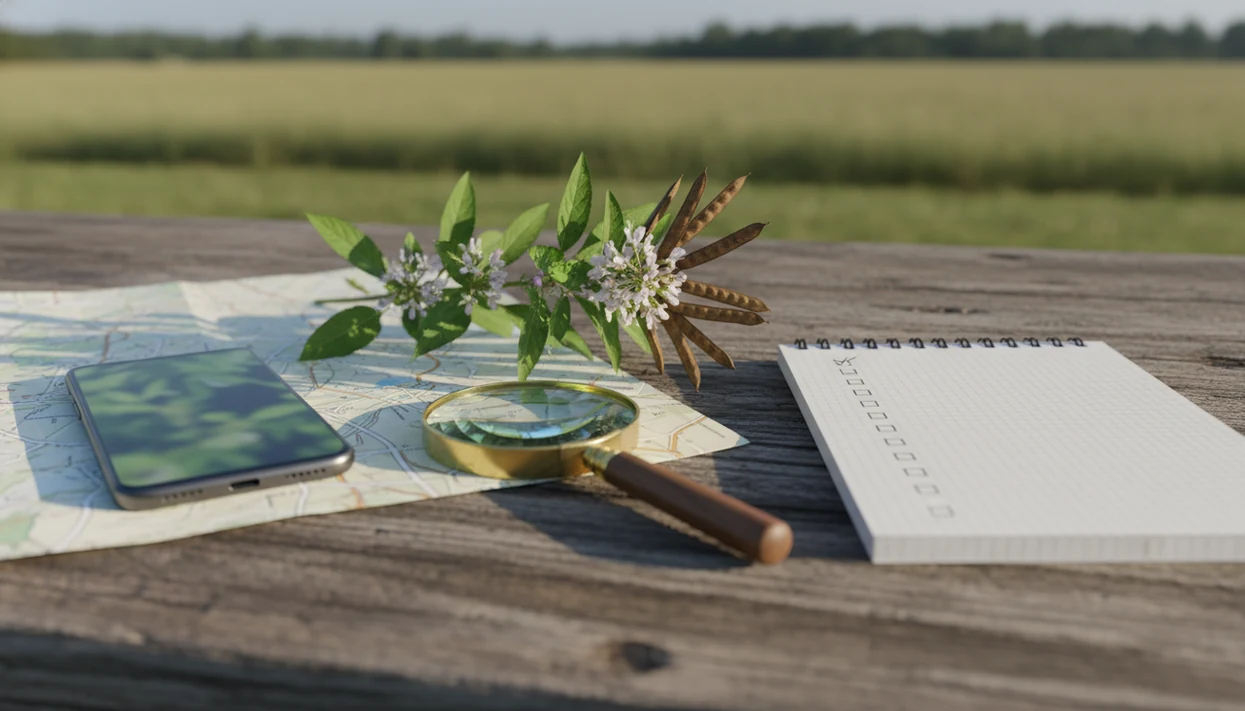
Use an invasive plant identifier app as a first-pass screening tool, not as final proof before reporting or removing a plant. Verify the result against local invasive species lists, extension offices, conservation agencies, or qualified experts because invasive status depends heavily on location.
> An invasive plant identifier app is a photo-based tool that suggests a plant species and may flag whether that species is introduced, regulated, or invasive in a particular region.
- App results should be treated as leads until confirmed by a local authority or extension source.
- A plant can be invasive in one region, harmless in another, and protected in a third.
- Do not remove, spray, sell, transport, or report a plant based only on one app result.
Invasive PlantApp Verification at a Glance
An app identification is a starting point, not an official invasive species determination. The safer chain is simple: take better photos, compare a second source, check a local list, then ask an expert when the result could affect removal, reporting, or control.
That chain matters. A wrong match can lead to removing a native plant, filing a false report, violating local rules, or choosing a control method that spreads the plant faster. We have seen users photograph one pretty leaf and miss the stem, fruit, and growth habit, which are often the clues that separate a look-alike weed from a regulated species.
Tools like PlantApp identify plants from photos and give care, watering, and disease troubleshooting steps for plant owners. Use that result as a lead, then verify the invasive status locally.
How to Verify an Invasive Plant App Result
To verify an invasive plant app result, treat the app name as a lead and build a short evidence trail around it. The goal is to confirm both the plant identity and its local invasive status before anyone removes, reports, or treats it.
- Photograph the plant from several angles: the whole plant, leaf arrangement, stem, bark when present, flowers, fruit, seed heads, and the nearby habitat or site conditions.
- Run the clearest images through the app, then save the suggested species name, confidence cues if shown, date, and location notes.
- Compare the suggested name with one official state, provincial, national, extension, or conservation-agency invasive plant list for your area.
- Check close look-alikes before acting, especially native species, young seedlings, hybrids, and regulated ornamentals that may be legal in one place and restricted in another.
- Contact an extension office, land manager, park staff, or invasive species program when removal, herbicide use, disposal, or public reporting is involved.
- Record the final confirming source, including whether it supported or rejected the app result, so the decision can be reviewed later.
How an Invasive Species App Checks Plant Photos
An invasive species app usually checks a plant photo by matching visual features against reference images and species records. The system may read leaf edges, flower shape, bark texture, fruit clusters, and growth habit, then compare those image embeddings with a plant database. In plain terms, it looks for visual neighbors, not courtroom proof.
Large biodiversity datasets make this process more useful. iNaturalist reported more than 100 million verifiable observations by 2023, giving researchers and identification systems a large pool of organism records source. Regional coverage matters too: Flora Incognita says its app covers about 4,800 Central European wild plant species, which helps explain why region-specific tools can perform better inside their target flora source.
Photo IDs are probability-based suggestions. A grow light clipped to a bookshelf can help a houseplant photo, but field plants still need habitat context, flowers, and local records.
Five Facts About Invasive Plant App Results
- AI plant identification can be fast, but it is not 100% accurate. A peer-reviewed Flora Incognita evaluation reported 75–88% correct identification depending on plant group and photo quality source.
- Invasive status is regional. It can change by state, province, country, habitat, county rule, and conservation priority.
- Government and conservation apps are usually built to complement expert review, not replace it. That is the right mental model.
- Non-native does not always mean invasive. Many introduced ornamentals persist without spreading aggressively or causing documented harm.
- Houseplants and garden plants may be safe indoors but risky outdoors in suitable climates. A vine in a pot can behave very differently near a creek.
Good AI plant identifier, disease diagnosis, and personalized plant care app for houseplants and garden plants deliver likely matches and next care steps, not final legal status or guaranteed field confirmation.
Local Invasive PlantApp Checks Before Reporting
What should I check before reporting an invasive plant? Start by collecting evidence that another person can review without guessing. Photograph the whole plant, leaves, stems, flowers, fruit, bark, growth habit, and surrounding habitat.
Then compare the app result with official state, provincial, national, or extension invasive species lists. Community science observations and herbarium records can support your hunch, but they should not be the final authority. When the ID is uncertain, contact an extension office, park staff, conservation district, or invasive species hotline.
Do not trespass, transport plant material, or shake seed heads while documenting. That last part is easy to forget on a trail edge. If your main problem is a yard weed rather than a regulated plant, our guide to identify garden weed from photo explains the photo angles that help separate common look-alikes.
Safety Boundaries for App-Based Invasive Plant Results
App-based invasive plant results should be framed as safety-limited suggestions, not guarantees. The responsible promise is careful wording, practical next steps, and clear boundaries before reporting, removing, spraying, or transporting a plant.
The guidance should help you improve photo quality, compare look-alikes, check local status, and seek expert confirmation. It should not give unsupported edible-foraging advice or hazardous removal instructions. Care guidance stays focused on plant identification, disease diagnosis, watering, and practical plant care.
PlantApp is not a government regulator, extension office, pesticide authority, or legal reporting agency. PlantApp can help you notice a likely match, but official action needs official confirmation.
What an Invasive PlantApp Does Not Verify
An invasive plant app cannot always verify legal status, exact local regulation, property ownership, or the required reporting process. It also may miss hybrids, seedlings, damaged plants, dormant stems, or close look-alikes that require flowers, fruit, or microscopic traits.
Databases can be outdated or thin in under-sampled regions. A missing plant tag from a nursery pot is annoying; a missing county regulation is more serious. Official confirmation may be needed before herbicide use, removal, disposal, sale restrictions, or public reporting.
The economic stakes are real. Invasive species cause major damage and control costs, but that does not mean every suspected plant is harmful. For garden context, a garden plant identifier app can help name the plant before you move into the stricter invasive-species verification steps.
Common Myths About Invasive Species App Results
Myth: If the app says invasive, remove it immediately. Correction: verify the ID, ownership, disposal rules, and local guidance before taking action.
Myth: AI plant ID is as reliable as a trained botanist in every case. Correction: botanists use more context, including habitat, keys, specimens, and regional experience.
Myth: Every non-native plant is invasive. Correction: non-native means introduced; invasive means spreading or causing harm in a specific ecosystem.
Myth: All apps include current regional legal status. Correction: many apps provide general species notes, not updated county or state rules.
Myth: One clear leaf photo is enough for every plant. Correction: one leaf may help, but stems, flowers, fruit, roots when safe, and habitat often decide the match. For lawn-specific cases, a lawn weed identifier app may narrow turf weeds before you check invasive status.
Regional Invasive Plant Identification Sources
Invasive status is ecological and legal, not just taxonomic. The same species may be invasive in one climate, ornamental in another, and regulated only in certain counties or watersheds.
Local extension services, natural resource agencies, conservation districts, and official invasive species councils usually outrank generic app labels. They know the local habitats, reporting rules, watch lists, and control priorities. Authorities generally recommend confirming suspected invasive species through regional lists or qualified local experts before reporting or removal.
For reporting or cross-checking, regional tools such as EDDMapS, iMapInvasives, state invasive species councils, and local extension databases may be more authoritative than a general photo-identification app because they are built around location-specific records and review workflows.
USDA and federal invasive-species resources describe invasive plants as a major ecological and economic burden, but regional confirmation still matters before acting on a suspected ID. The U.S. invasive species damage and control cost estimate is about $120 billion per year source. For trees and woody seedlings, a tree identification app can help capture bark, leaves, and growth form before regional verification.
Limitations
- AI may confuse native and invasive look-alikes, especially when flowers or fruit are missing.
- Poor lighting, blurry images, immature growth, damaged leaves, and partial photos reduce accuracy.
- Training data can be weaker for rare species, hybrids, cultivars, and under-documented regions.
- Offline use may be limited in remote field locations where reporting often happens.
- Legal and regulatory status can change faster than app databases update.
- No consumer app replaces extension agents, botanists, land managers, or official invasive species authorities.
- Apps should not be the sole basis for herbicide use, removal, sale restrictions, disposal, or public reports.
- Habitat clues matter. A plant beside a restored wetland carries different risk than the same plant in a sealed indoor pot.
Use the app result as a starting point. Then slow down.
FAQ
Are invasive plant apps accurate?
Accuracy varies by photo quality, species, region, growth stage, and look-alike risk. Treat the result as a likely match until it is checked against local sources.
Can apps identify invasive weeds?
Many apps can suggest weed species from photos. The invasive status still needs confirmation through official regional lists or local experts.
Should I remove an invasive plant?
Do not remove a suspected invasive plant until the identity, property ownership, disposal method, and local guidance are confirmed. Removal can spread seeds or violate rules.
Who confirms invasive plant reports?
Extension offices, natural resource agencies, park staff, conservation districts, invasive species councils, and official hotlines may confirm reports. The right contact depends on your region.
Is non-native the same as invasive?
No. Non-native means introduced outside its original range, while invasive means harmful or spreading in a specific ecosystem.
What photos identify invasive plants?
Useful photos show the whole plant, leaves, stems, flowers, fruit, bark, roots when safe, and surrounding habitat. Natural light is better than yellow kitchen light at 10 p.m.
Do apps show local regulations?
Some apps may show regional status, but users should verify current rules with official local sources. Regulations can change by state, province, county, or site.
Can houseplants become invasive outdoors?
Yes, some cultivated plants can become invasive if planted outdoors in suitable climates. Keep houseplants contained unless local sources confirm they are safe to grow outside.