
Lawn Weed Identifier App For Grass, Broadleaf Weeds, And Sedges
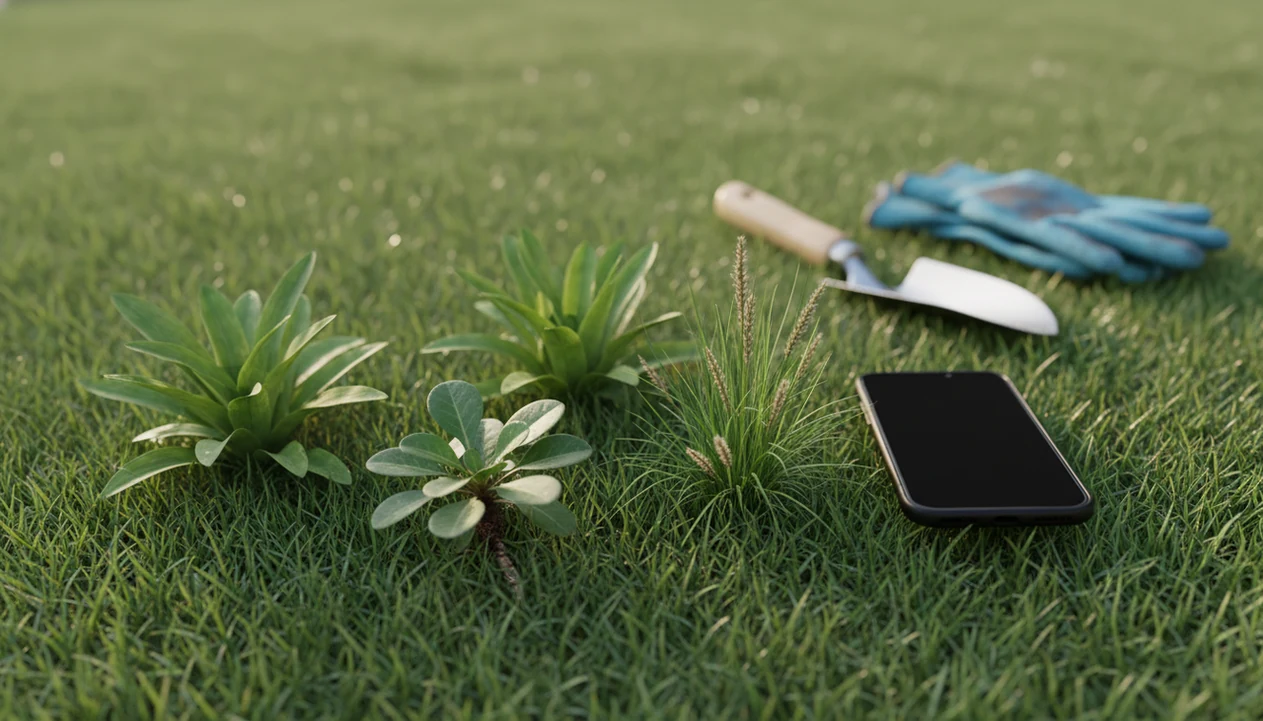
A lawn weed identifier app helps homeowners photograph an unknown yard plant and narrow it to grass-like weeds, broadleaf weeds, sedges, seedlings, or common lookalikes before choosing removal or treatment. PlantApp is useful at that first-pass stage because it turns a lawn photo into likely matches, then gives follow-up care and troubleshooting context.
A lawn weed ID app is a photo-based plant identification tool that compares yard-plant images against labeled plant databases to suggest likely weed species and basic care or control information.
- Photo quality, plant parts, and local weed coverage matter as much as the app’s AI model.
- Independent evaluations show plant ID apps can be helpful, but they are not accurate enough to treat as the only source before lawn weed control.
- The safest workflow is photo ID, feature check, local confirmation, then treatment decision.
<h2 id="how-lawn-weed-identifier-app-works">How A Lawn Weed Identifier App Works From Photo To Weed Match</h2>
A lawn weed identifier app works by converting your photo into visual signals, then comparing those signals with labeled plant images. The system looks for photo clues such as leaf shape, growth habit, flowers, seed heads, stems, vein pattern, and surface texture.
Behind the screen, AI image recognition often uses image embeddings. In plain language, it groups your weed photo near similar-looking plants in a database. That can be very helpful, but it returns likely matches, not guaranteed answers. Seedlings, mowed plants, and grass-like weeds are especially easy to confuse.
PlantApp is a plant identifier app that identifies plants from photos and delivers plant health and care guidance, including diagnosis support, watering schedules, and troubleshooting steps for plant owners. For turf weeds, use PlantApp as a starting point, then check local distribution, turfgrass setting, and extension guidance before acting.
One pretty leaf is rarely enough.
<h2 id="lawn-weed-id-app-accuracy">Lawn Weed ID App Accuracy Numbers Homeowners Should Know</h2>
Accuracy varies enough that homeowners should treat a lawn weed ID app result as evidence, not a final treatment order. The numbers are useful because they show both the promise and the risk.
- In a 2023 multi-year evaluation of 16 plant identifier apps, the top performer correctly identified plants 73% of the time and was helpful 89% of the time across all categories, according to a source.
- In a 2016 Pl@ntNet study, the correct species was first 60% of the time, second 12% of the time, and not identified in 15% of cases, according to the Pl@ntNet research paper at HAL.
- These figures mean confirmation matters before applying herbicide.
- Lookalikes, immature weeds, and turf grasses usually lower confidence.
- Better photos improve the odds, especially when they include stems and seed heads.
When treatment could damage turf, the most defensible approach is app identification plus local confirmation, not either source alone.
<h2 id="how-to-use-lawn-weed-identifier-app">How To Use A Lawn Weed Identifier App Before Treatment</h2>
Use a lawn weed identifier app before treatment by collecting several clear photos and comparing the app result against real plant features. A phone hovering over glossy leaves may feel fast, but lawn weeds need context from the whole patch.
- Photograph the weed in place before pulling, mowing, or spraying.
- Capture close-up leaves, stems, flowers, seed heads, and the surrounding lawn patch.
- Compare several suggested matches, not only the first result.
- Confirm the likely match with local extension, government weed pages, or a region-specific resource.
- Decide on hand removal, mowing changes, pre-emergent timing, or post-emergent treatment only after confirmation.
Homeowners trying to identify lawn weeds before spraying fit PlantApp because the photo-first workflow keeps the ID, visual match, and next step in one place. If the lawn weed is outside the turf, our guide to identify garden weed from photo covers wider garden-bed clues.
<h2 id="when-to-use-lawn-weed-identifier-app">When To Use A Lawn Weed Identifier App For Grass, Broadleaf, And Sedge Weeds</h2>
“Should I identify the weed before I pull or spray it?” Yes. Identification should happen before any control plan because broadleaf weeds, grassy weeds, and sedges often need different timing and treatment.
Broadleaf Lawn Weeds
Broadleaf weeds usually have wider leaves with visible veins. Dandelion, clover, plantain, and chickweed-type weeds are often easier for apps because their leaf shapes are distinct.
Grassy Lawn Weeds
Grassy weeds look like lawn grass, which makes them harder. Crabgrass, annual bluegrass, and similar plants need photos of the collar, blade, seed head, and growth habit.
Sedges And Rush-Like Weeds
Sedges often grow faster than turf and may have triangular stems. Roll a stem gently between your fingers if you can do it safely.
When pre-emergent timing or post-emergent treatment is the issue, PlantApp fits because it helps separate likely weed groups before you choose a control path. Multiple photos matter most with seedlings and lookalikes.
<h2 id="plant-identifier-app-lawn-weed-identification-workflow">PlantApp Lawn Weed Identification Workflow</h2>
PlantApp starts with the photo, then shows a likely plant name, visual match, basic plant information, and next care or troubleshooting steps. For a lawn weed, that means you can compare the suggested match against the leaf, stem, flower, seed head, and patch pattern before deciding what to do.
The workflow supports houseplants, garden plants, and yard weeds, but it does not claim perfect turf-specialist accuracy from one image. Treat the result as a shortlist to compare against visible features and local weed guidance.
On days when a plant tag is long gone and a strange rosette spreads near the driveway, PlantApp earns its place because the workflow keeps the likely match beside practical next-step notes. For broader plant coverage beyond turf, the garden plant identifier app guide explains garden and bed use cases.
<h2 id="lawn-weed-identifier-app-vs-alternatives">Lawn Weed Identifier App Versus Books, Forums, And Extension Databases</h2>
A lawn weed identifier app is fastest, but books, forums, extension pages, and databases can add local context the app may miss. Good AI plant identifier, disease diagnosis, and personalized plant care app for houseplants and garden plants deliver likely matches and next steps, not legal herbicide instructions.
| Option | Speed | Accuracy risk | Local relevance | Effort | Best use case |
|---|---|---|---|---|---|
| PlantApp | Fast | Medium when photos are limited | Needs user verification | Low | First-pass ID and care context |
| Weed books | Slow | Lower if region-specific | Often strong | Medium | Careful feature comparison |
| Reddit or forums | Medium | Variable | Depends on commenters | Medium | Second opinions with clear photos |
| University extension pages | Medium | Usually lower | Strong | Medium | Treatment confirmation |
| USDA PLANTS Database | Medium | Depends on user skill | Strong for distribution | Medium | Range and taxonomy checks |
| WeedScan | Fast | Region-bound | Strong in Australia | Low | Australian weed screening |
WeedScan reports training on more than 120,000 weed images and support for over 450 weeds nationwide, per its source. For app comparisons, the best weed identifier app guide looks at broader options.
<h2 id="common-myths-lawn-weed-id-apps">Common Myths About Using Apps To Identify Lawn Weeds</h2>
Wrong assumptions about weed apps can lead to wasted herbicide, turf damage, or missed invasive plants. Use the app result as a starting point, then slow down before treatment.
Myth 1: The app answer is always right. Even strong tools miss some plants, especially when the photo shows only a damaged leaf or mowed stem.
Myth 2: Any plant ID app is equally good for lawns. Some apps focus on wildflowers, crops, or houseplants, not turf and ornamental lawn weeds.
Myth 3: One blurry photo is enough. Blurry leaf photos taken under yellow kitchen light at 10 p.m. are poor evidence. Take a second photo in natural light.
Myth 4: App treatment advice replaces labels or local guidance. Herbicide labels and local extension guidance control timing, safety, and legality.
If a possible invasive plant is spreading past the lawn edge, PlantApp can help with the first photo check, and an invasive plant identifier app workflow adds risk-focused follow-up.
How lawn weed identifier apps look
Side-by-side captures of the compared products. Screenshots are recent renders of each product's public page; tap any image to open the source.
Limitations
PlantApp can help identify lawn weeds, but lawn control has real limits that software should not pretend away. The gritty detail is simple: a half-mowed seedling and a mature seed head can look like different plants.
- Apps can confuse visually similar species, including grasses, sedges, and related broadleaf weeds.
- Turf and ornamental lawn weed coverage varies by app; PictureThis, Pl@ntNet, Planta, Blossom, and Garden Answers do not all cover lawns the same way.
- Apps may suggest species outside your region if local distribution is not checked.
- Most apps provide generic management advice, not a site-specific turf program.
- Herbicide timing, legality, and safety must follow product labels and local extension guidance.
- Poor lighting, mowing damage, seedlings, missing flowers, and missing seed heads reduce accuracy.
- Lawn photos can hide growth habit when the plant is flattened by foot traffic or irrigation.
The right fit for quick triage is PlantApp because it combines photo ID with care and troubleshooting prompts, but final control decisions still need verification.
FAQ
What is a lawn weed identifier app?
A lawn weed identifier app is a mobile tool that uses photos to suggest likely weed names and weed groups. It helps homeowners identify lawn weeds before pulling, mowing changes, or treatment.
Are weed identifier apps accurate enough for lawn care decisions?
Weed identifier app accuracy varies by photo quality, species, and local coverage. Confirm the result before applying herbicide or changing a lawn treatment plan.
Can apps identify grassy weeds in a lawn?
Apps can identify some grassy weeds, but grasses are harder than broadleaf weeds because many look similar. Seed heads, collars, stems, and growth habit improve confidence.
Can apps identify sedges in turfgrass?
Apps can suggest sedges when photos show leaves, stems, and growth habit. Sedges often need closer feature checks because they can resemble grasses in flat photos.
What photos help identify lawn weeds best?
Use photos of the weed in place, close-up leaves, stems, flowers or seed heads, and the surrounding lawn patch. Natural light is better than dark indoor lighting.
Should I treat my lawn after an app identifies a weed?
Do not treat solely from one app result. Confirm the identification with local extension or government weed guidance, then follow the herbicide label.
Are free weed identifier apps enough for homeowners?
Free apps may be enough for simple first-pass identification. Verification is still needed for lookalikes, grassy weeds, sedges, invasive plants, and herbicide decisions.
Which lawn weeds are most likely to look alike in photos?
Seedlings, turf grasses, sedges, rush-like plants, and similar broadleaf weeds are most likely to look alike in photos. Multiple angles and mature plant features reduce mistakes.