
Identify Garden Weed From Photo Before Pulling Or Spraying
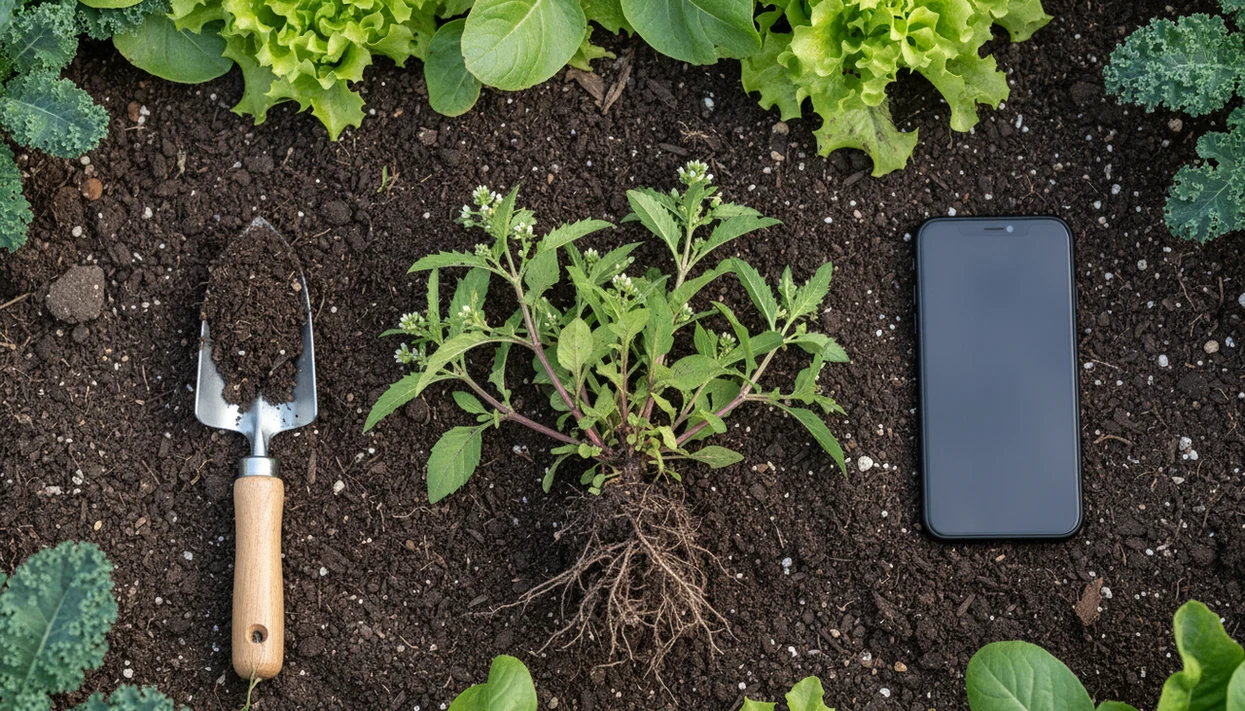
To identify garden weed from photo, take clear images of the leaves, stem, flowers or seed heads, roots, and the whole plant in its growing spot, then compare more than one feature before you pull or spray. A weed photo identifier can give a fast shortlist, but you should verify lookalikes and growth stage before choosing a control method.
Definition: A garden weed is any plant growing where you do not want it, so weed identification is about matching the plant’s features and deciding whether it belongs in that exact garden spot.
- Use several photos: whole plant, leaf close-up, stem, flowers or seed heads, roots, and surrounding garden context.
- Sort the plant first as broadleaf, grassy weed, or sedge because those groups often require different control choices.
- Do not act on one AI result alone; verify the ID against leaf shape, stem type, growth habit, season, and trusted plant databases.
Garden Weed ID Basics Before You Take A Photo
A weed is not a botanical category; it is a plant growing where it is unwanted. A volunteer tomato may be welcome near the compost pile and pulled from a neat row of labeled nursery pots. The context decides the problem.
International Weed Science Society materials describe about 250,000 weed species worldwide, which explains why a single garden weed ID label can feel less tidy than expected source. The same plant may be food for pollinators in one border, a nuisance in a vegetable bed, or a risk if it spreads into nearby habitat.
Photo ID is a starting point, not the final control decision. Before acting, compare the leaf shape, stem, and growth habit, then ask whether that plant actually causes trouble in that exact spot.
Location matters.
Weed Photo Identifier Mechanics From Plant Images
A weed photo identifier works by comparing visible plant traits against reference images and returning likely matches. It reads photo clues such as leaf shape, venation, flower structure, stem texture, color pattern, and growth habit.
Under the hood, many tools use image recognition and image embeddings, which means the system turns visual patterns into data it can compare. In plain terms, it looks for plants that resemble your photo, then ranks possible names. It does not know the whole garden story from one close-up.
Stat callout: CSIRO says the WeedScan AI model was trained on more than 120,000 weed images, and WeedScan covers over 450 priority and other weeds in its database and alert system source.
That scale is useful, but it also shows the boundary. A plant outside the training set, or a seedling with only two leaves, may produce a plausible but wrong shortlist.
5 Steps To Use A Weed Photo Identifier Correctly
Use a weed photo identifier as a structured check, not as a one-tap verdict. The result is stronger when your photos show the whole plant and the small traits that separate lookalikes.
- Photograph the whole plant in place. Include the bed, lawn edge, mulch, or paving so scale and site are visible.
- Capture close-ups of leaf tops and undersides. Show leaf arrangement, margins, hairs, and veins without your fingers covering them.
- Add stem, flower, seed head, and root photos if available. A mystery cutting on the kitchen counter is harder to read than a plant still attached to its roots.
- Upload the best images to the identifier and note the top 2-3 suggestions. For weed photo ID, use the result to collect likely names, then compare those names against leaf shape, stem type, flowers, roots, season, and local range.
- Verify the result before pulling, spraying, or ignoring the plant. Use the app result as a starting point, especially when the ID is uncertain.
A good AI plant identifier, disease diagnosis, and personalized plant care app for houseplants and garden plants gives likely matches and next steps, not guaranteed species confirmation or blanket treatment advice.
Step 1: Capture Garden Weed Photos With Enough Detail
What photos do you need to identify a garden weed? Take at least four photos: the whole plant, a leaf close-up, the stem, and the plant growing in the bed or lawn.
Add flowers, seed heads, and roots when they are present. Roots rinsed clean in a sink can reveal a taproot, rhizome, bulb, or fibrous clump, but avoid tearing up half the bed just to get one picture. If the plant may be valuable or native, wait before digging.
Avoid blurry images, harsh shadows, and photos where fingers cover the leaf base or stem node. Blurry leaf photos under yellow kitchen light at 10 p.m. often confuse tools that need edge shape and vein detail.
Seedlings and damaged plants are harder because they may lack mature leaves, flowers, or a clear growth habit. If the photo lacks leaves, stem, and context, retake it before trusting the result.
For most gardeners, several ordinary photos are better than one beautiful close-up because weed ID depends on repeated clues, not one attractive leaf.
Step 2: Sort The Weed Photo As Broadleaf, Grassy Weed, Or Sedge
Sorting the plant into broadleaf, grassy weed, or sedge gives you a safer first branch in the decision tree. These groups often respond to different hand-removal tactics and control choices.
| Weed group | Photo clues to check | Why it matters |
|---|---|---|
| Broadleaf weeds | Wider leaves, branching veins, paired or alternate leaves, often showy flowers | Leaf shape, flower structure, and taproots often guide ID and removal |
| Grassy weeds | Narrow blades, parallel veins, jointed stems, grasslike seed heads | They can blend into turf, so a lawn weed identifier app may help separate grass from grasslike weeds |
| Sedges | Grasslike leaves, triangular stems, wetter-site habit | Many sedges are not controlled like true grasses, and hand removal can miss underground parts |
The old field check is still useful: “sedges have edges” because many sedges have triangular stems. Roll the stem gently between your fingers if the plant is sturdy enough.
Not every plant cooperates.
Step 3: Match Garden Weed ID Clues Beyond The Leaf
A reliable garden weed ID compares several plant parts after the first app result. One pretty leaf rarely shows enough information to separate close relatives.
- Leaves: Compare arrangement, margins, venation, surface hairs, and whether leaves form a basal rosette or climb the stem.
- Stems: Check whether stems are square, round, hollow, creeping, woody, jointed, or leaking milky sap when broken.
- Flowers or seed heads: Note petal count, flower clusters, seed shape, and timing, since many weeds become easier to confirm at this stage.
- Roots: Look for a taproot, rhizome, stolon, bulb, tuber, or fibrous root mass before deciding how to remove it.
- Growth habit: Describe the plant as rosette-forming, vine-like, mat-forming, upright, clumping, spreading, or twining.
The most useful weed photo set usually shows leaves, stems, reproductive parts, roots, and site context because each clue reduces lookalike risk.
A thumb wiping dust from a leaf can expose hairs or a dull surface, but clean detail is not the same as full identification. You still need the stem and habit.
Step 4: Verify Weed Photo Identifier Results With Trusted Sources
How do you verify a weed photo identifier result? Compare the top app match against at least one trusted guide, extension resource, herbarium page, or plant database before taking irreversible action.
The USDA PLANTS database includes records for more than 24,000 plant taxa in the United States and its territories source. That kind of database helps you check whether a suggested plant occurs in your region, although it will not decide your garden management for you.
Match the suggested name against range, habitat, season, leaf traits, flowers, and seed heads. If the app says a plant is a known invasive, a regional guide or invasive plant identifier app can help you slow down and confirm the risk.
If two tools or references disagree, treat the plant as unidentified. Do not spray or compost it until a regional source supports the match.
Do not rely on one close-up image or one app label. If the plant is not urgent and the ID is still uncertain, wait for flowers or seed heads.
Step 5: Choose Pulling, Spraying, Waiting, Or Keeping After Garden Weed ID
After identification, choose the least risky action that fits your confidence level and garden site. Confident ID plus an unwanted location points toward action; uncertain ID or possible beneficial value points toward waiting.
| Decision point | Reasonable action | Practical caution |
|---|---|---|
| Confident ID, small annual weed, moist soil | Hand-pull | Remove the root before seed forms |
| Confident ID, spreading perennial | Dig carefully or seek local guidance | Broken rhizomes or stolons may regrow |
| Uncertain seedling or missing flowers | Wait and recheck | Mark the spot so you do not forget it |
| Possible native, wildflower, or beneficial plant | Keep temporarily | Compare with a wildflower identifier app if it is blooming |
| Considering spray control | Read the exact product label and local rules | Site, weed species, weather, and nearby plants matter |
Spraying depends on the exact weed, site, product label, and local regulations. We do not recommend specific herbicide products or edible-foraging uses from a photo ID alone.
For home gardens, hand-pulling is often easier than spraying when annual weeds are small and soil is moist because the root comes out with less disturbance.
Common Garden Weed Photo ID Myths That Cause Mistakes
Bad weed decisions often start with a believable shortcut. These five myths are the ones we see most often when people upload one image and act fast.
- “A weed photo identifier replaces verification.” It does not. Treat the result as a likely match and compare it with regional references.
- “Flowers and seed heads are optional.” They are often among the strongest clues, especially for broadleaf weeds.
- “All weeds should be removed immediately.” Some unwanted-looking plants are native, beneficial, or harmless in that spot.
- “All broadleaf weeds can be treated the same way.” Leaf width is only the group; roots, life cycle, and site still matter.
- “One perfect leaf close-up is enough.” A single leaf can miss scale, stem type, and growth habit.
Plant tags faded by sun or tossed with the nursery sleeve make later garden checks harder. If you are comparing tools, a best weed identifier app guide can help you judge accuracy, privacy, and practical features before you rely on one workflow.
Limitations
Photo-based garden weed ID is useful, but it has clear weak spots. Use these limits as a safety check before pulling, spraying, or deciding a plant is harmless.
- Seedlings often lack flowers, mature leaves, and growth habit clues.
- Damaged, mowed, wilted, or diseased plants can mislead photo tools.
- Lookalike weeds and native plants may share similar leaves or flowers.
- A single close-up photo usually misses scale, growth habit, and site context.
- Rare local species may not be well represented in app databases.
- Control choices depend on location, garden type, local rules, and confirmed identity.
- Some plants are easier to identify later in the season after flowering or seed formation.
Tools such as PlantApp can organize likely matches and care clues, but local extension guidance or an experienced horticulturist is safer when the plant may be invasive, protected, toxic, or hard to replace.
FAQ
Can I identify weeds from a photo?
Yes, clear photos can suggest likely weed names when they include leaves, stems, flowers, roots, and the growing site. Verify the match before pulling or spraying.
What photos identify garden weeds best?
Use a whole-plant photo plus close-ups of leaves, stems, flowers, seed heads, and roots. Include the surrounding bed or lawn for scale and context.
Are weed identifier apps accurate?
Weed identifier apps can be useful, but they are not perfect. Seedlings, damaged plants, rare species, and lookalikes can produce wrong or uncertain results.
Should I pull weeds immediately after a photo ID?
Pulling is reasonable for a small, confidently identified unwanted weed in moist soil. Wait if the plant is a seedling, possible native, or missing key ID features.
Do flowers help identify weeds?
Yes, flowers and seed heads are often among the strongest weed identification clues. Many weeds are easier to confirm after they bloom or set seed.
How do I identify grassy weeds?
Grassy weeds usually have narrow blades, parallel veins, and jointed stems. Compare the seed head, growth habit, and where it is growing before choosing control.
What is a sedge weed?
A sedge weed is a grasslike plant often recognized by triangular stems and a distinct clumping or spreading habit. Sedges often grow in wetter sites than many lawn grasses.
Can Google identify garden weeds?
Google-style visual search can provide clues and possible names. Confirm the result with a regional extension guide, herbarium record, or dedicated weed photo identifier before taking action.