
Find Weed Name Before Pulling, Spraying, Or Keeping It
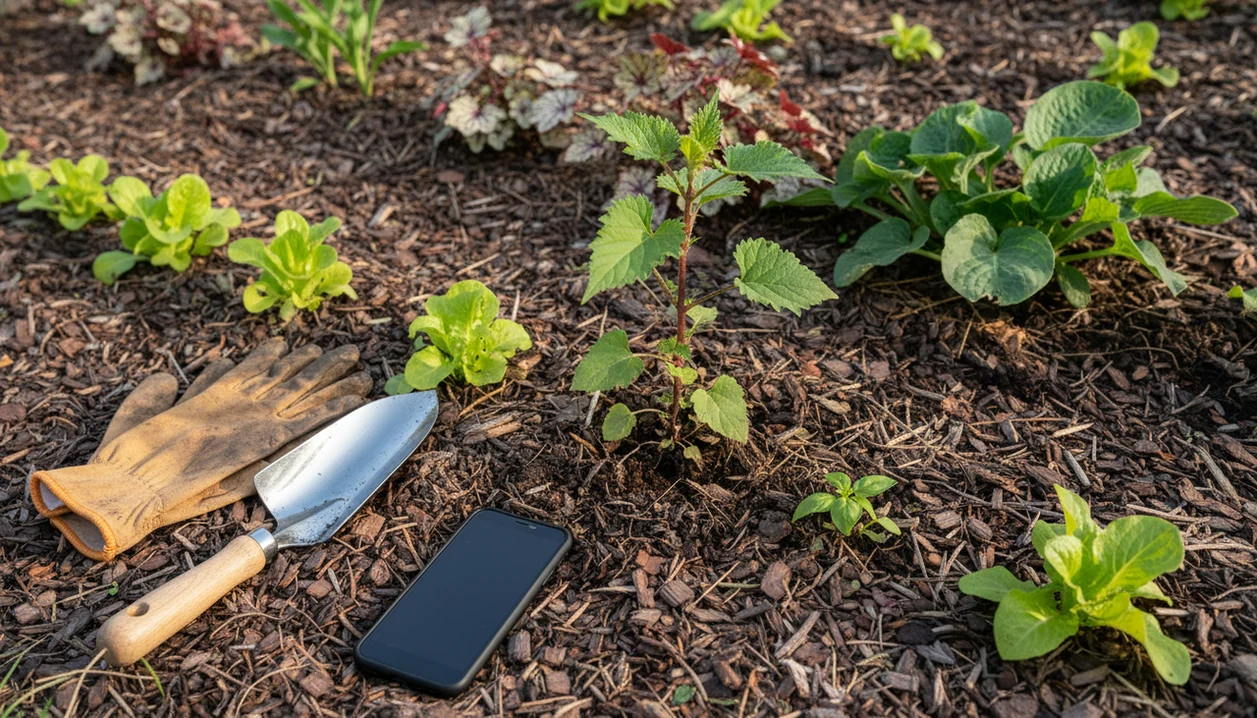
Use a photo-based plant identifier to find weed name before pulling, then confirm the match if the plant could be invasive, toxic, protected, or valuable. A weed name is the starting point, not the final decision: photo quality, growth stage, and local context decide whether you should pull, spray, move, or keep it.
> Definition: A photo-based plant ID tool compares plant photos with known visual traits, then returns probable matches and care or troubleshooting guidance. Use the result as a starting point, not a final weed-control decision.
TL;DR
- Take clear photos of leaves, stems, flowers, seed heads, and the whole plant before removing anything.
- Treat app results as probable matches, especially for seedlings, grasses, look-alikes, and mixed garden patches.
- Confirm uncertain or high-stakes weeds with a local extension office, trusted database, or expert before spraying or removing.
At-a-glance weed name decision before pulling
A “weed” is simply a plant growing where you do not want it; it is not always harmful, invasive, or worthless. If an app gives a strong match to a common nuisance weed in a low-risk spot, hand-pulling may be reasonable.
Still, pause when the result is uncertain, the plant is flowering, or the patch sits near natives or vegetables. We’ve seen mystery seedlings tucked into mulch look like trouble, then turn out to be self-seeded ornamentals from last year’s bed.
| Situation | Safer action |
|---|---|
| Strong match, common weed, isolated in bare soil | Pull now |
| Blurry photo, seedling, grass, or no flowers | Identify more |
| Near native plants, waterways, pets, or food crops | Verify locally |
| Possible volunteer, wildflower, herb, or young perennial | Keep and monitor |
For low-risk garden beds, checking the name first is often easier than replanting a mistaken pull because the root, growth habit, and location are still visible.
How photo weed identification works before you pull
Photo weed identification works by comparing visible plant traits in your image with patterns learned from plant image datasets, then returning probable matches. The app looks at photo clues such as leaf shape, vein pattern, stem texture, flower form, seed heads, and growth habit.
Under the hood, many tools use image embeddings, which are mathematical summaries of what the camera sees. Plainly: the app turns your photo into a pattern and compares it with known plant patterns. WeedScan says its AI was trained on more than 120,000 weed images and covers over 450 priority and other weeds (https://weedscan.org.au/).
That scale helps, but it does not remove uncertainty. Apps may show confidence levels or several possible matches because weeds have look-alikes. Seedlings, grasses, sterile plants, and blurry photos under yellow kitchen light at 10 p.m. can all weaken the result.
Probable, not final.
How to use a plant app to identify weed before pulling
Use a plant app as a structured check, not as a one-photo verdict. The goal is to identify weed before pulling with enough evidence to decide whether removal is safe.
- Photograph the whole plant in its growing location before touching it.
- Capture close-ups of leaves, stems, flowers, seed heads, and leaf arrangement.
- Upload the clearest images to PlantApp or another trusted plant ID tool.
- Compare the top matches against visible features, not just the first name returned.
- Save the result and verify locally before herbicide use or removal of unusual plants.
A good AI plant identifier, disease diagnosis, and personalized plant care app for houseplants and garden plants should deliver likely matches and next steps, not guaranteed certainty from one rushed photo. If you need a broader workflow for weeds in beds and borders, our guide to identify garden weed from photo covers the photo sequence in more detail.
Five facts to check weed name safely
These five facts matter before you check weed name and act on the result. They prevent the two common mistakes: removing useful plants and spraying when the ID is still shaky.
- A plant ID app gives a probable match, not a guaranteed species identification.
- Clear photos of leaves, stems, flowers, seed heads, and the whole plant improve the result.
- A confident app result does not automatically mean the plant is safe to pull or spray.
- Weed status is local; the same plant may be harmless, invasive, protected, or useful depending on region.
- High-stakes cases should be checked with extension services, agronomists, or trusted plant databases.
Local extension services and weed authorities generally recommend confirming important weed IDs before chemical control, especially for regulated plants or agricultural sites. That advice also helps home gardeners when a plant appears suddenly in a raised bed or near a native planting.
Photo checklist to identify weed before pulling
One blurry top-down leaf photo is usually not enough to identify a weed well. The app needs structure, scale, and context, especially when neighboring plants overlap in a crowded bed.
Whole plant: Show the full plant where it is growing, including height and spread. Photograph before pulling because roots and growth habit can be lost once it is on the path.
Leaf details: Capture the top and underside of leaves. Include leaf arrangement on the stem, since opposite and alternate leaves can separate look-alikes.
Stem, flower, and seed head: These parts often carry the strongest ID clues. A thumb wiping dust from a leaf may reveal hairs, ridges, or silver streaks that the first photo missed.
Patch context: Step back and show the surrounding patch, soil, mulch, lawn, or bed edge. Natural light helps. If plants are tangled, gently separate the target plant without breaking it.
For lawn-specific grasses and rosette weeds, a lawn weed identifier app can be more useful than a general photo search.
Common garden plants mistaken for weeds before pulling
Many wanted plants look weedy when they first emerge. Volunteers, native seedlings, self-seeded ornamentals, herbs, groundcovers, and young perennials can all look like random invaders before they flower.
Native wildflower seedlings: Young coneflowers, milkweeds, asters, and similar seedlings may appear away from their original spot. Check against a regional source before clearing a “messy” patch.
Young ornamentals: Cosmos, calendula, foxglove, and other self-seeders can return without a label. Nursery tags also fade in sun or disappear with the sleeve.
Groundcovers and herbs: Mint, oregano, violets, ajuga, and creeping plants may spread beyond the intended edge. The practical choice may be move, label, trim, or remove.
Tree seedlings: Oak, maple, elm, and other seedlings often appear in beds after birds or wind do the planting. A tree identification app can help separate a volunteer tree from a broadleaf weed.
Do not eat a plant based only on an app result. Edible, medicinal, and toxic look-alikes require expert confirmation.
Pull, spray, keep, or verify after you check weed name
A weed name alone does not decide management. The next step depends on invasiveness, toxicity, legal or protected status, growth stage, location, and whether the plant is mixed with ornamentals, vegetables, or native plants.
| After identification | When it fits | What to do next |
|---|---|---|
| Pull by hand | Common weed, isolated plant, low-risk bed | Remove roots if practical |
| Avoid spraying and verify | Uncertain ID or nearby desirable plants | Retake photos and confirm |
| Keep and monitor | Possible native, volunteer, or useful groundcover | Label it and watch growth |
| Contact local authority | Regulated, toxic, invasive, or unusual plant | Ask extension or local weed office |
When pulling is low risk
Pulling is lower risk when the plant is small, isolated, clearly matched to a common nuisance weed, and not growing among desirable roots. Finger pressed into dry potting mix or loose garden soil can tell you whether it will lift cleanly or snap at the crown.
When spraying needs verification
Herbicide use needs a reliable ID, label compliance, and local safety checks. Avoid spraying when the plant is near ornamentals, vegetables, waterways, children, pets, or mixed native patches.
Is there an app that can find weed name before pulling?
Yes. Plant identifier apps can suggest weed names from photos, especially when you provide clear images of leaves, stems, flowers, seed heads, and the whole plant.
Photo ID tools can help with plant identification, likely disease diagnosis, and care steps after a plant is named. WeedScan focuses on priority and other weeds and publishes its dataset claim at https://weedscan.org.au/. Pl@ntNet describes itself as a citizen-science plant identification project (https://plantnet.org/en/), while PictureThis is a high-volume consumer plant ID app with vendor-reported accuracy claims.
The right app choice still depends on photo quality, plant stage, and local verification. A rotated pot beside a coffee mug may be fine for a houseplant ID, but garden weeds need more context: soil, neighboring plants, and the full growth habit. If you are comparing tools, the best weed identifier app guide breaks down where different apps fit.
Limitations
Photo ID can make weed decisions safer, but it has real limits. Treat the result as a starting point when the consequence of a mistake is high.
- AI plant ID is not a substitute for expert confirmation for dangerous, regulated, protected, or high-value plants.
- Seedlings, grasses, sterile weeds, and mixed patches are harder to identify accurately.
- Vendor accuracy claims may not match real garden conditions with poor lighting, partial plants, or unusual growth stages.
- A weed name does not tell you the best control method by itself.
- Herbicide decisions require label compliance, local rules, and a reliable identification.
- Apps may give multiple look-alike matches, and the first result may not be correct.
- Do not use app identification alone for edible-foraging, medicinal, toxic, or legal decisions.
We still see users photograph only one pretty leaf and skip the stem, pot, soil surface, or surrounding patch. That missing context matters. Photo ID tools are more useful when the image set shows the full plant, plant parts, and growing context.
FAQ
Can I identify weeds by photo?
Yes, photo identification can suggest likely weed names when images are clear and show the whole plant, leaves, stems, flowers, seed heads, and growth location. Treat the result as probable, not guaranteed.
Should I pull unknown weeds?
Pause before pulling an unfamiliar, unusual, flowering, or well-placed plant. Verify first if it is near desirable plants, natives, vegetables, waterways, children, or pets.
Are weed identifier apps accurate?
Weed identifier apps can be helpful, but accuracy depends on photo quality, plant stage, and how distinctive the plant is. Seedlings, grasses, and look-alikes are harder.
What photos identify weeds best?
The most useful photos show the whole plant, leaf close-ups, stems, flowers, seed heads, and the growing location. Natural light and scale improve the result.
Can weeds be native plants?
Yes, some plants called weeds are native volunteers or beneficial plants depending on location. Local context decides whether they should be kept, moved, monitored, or removed.
Is every weed invasive?
No, “weed” does not mean invasive everywhere. Invasive status is local and should be checked against regional guidance.
Can I spray after app identification?
Do not spray based only on an app result when the ID is uncertain. Herbicide use requires reliable identification, label compliance, and local safety checks.
How do I verify weed names?
Compare the app match with visible plant features, retake better photos, and check trusted databases or local extension resources. For unusual or high-stakes plants, ask an expert before acting.