
A plant care calendar is a recurring, season-aware schedule of watering, fertilizing, pruning, repotting, and pest-check tasks tailored to each plant's species, growth stage, and local climate.
- The app creates species-specific care schedules for watering, feeding, repotting, pruning, and pest checks, not one-size-fits-all reminders.
- Task frequency and intensity adjust across seasons because many plants need 25 to 50% less water in winter and little or no fertilizer during dormancy.
- AI photo diagnosis can update your plant care calendar when it detects stress, pests, or disease, prompting earlier intervention.
- Indoor and outdoor plants live in one unified calendar view, aligning houseplant care with garden planting, dividing, and pruning windows.
- You can customize, skip, or reschedule any task, but consistent reminders help prevent the overwatering and neglect that kill many houseplants each year.
5 Facts About Plant Care Calendars Every Owner Should Know
- A plant care calendar is a recurring schedule for watering, fertilizing, pruning, repotting, and pest checks, tied to each plant rather than one household alarm.
- Seasonal plant care matters because most plants grow faster in spring and summer, then slow down or rest in fall and winter.
- AI identification and photo-based diagnosis can update the schedule when the likely match shows yellowing, leaf spots, pests, or stress.
- Outdoor calendars should align planting, pruning, dividing, mulching, and bare-root planting with regional seasonal windows.
- Users can edit every task, but consistency is what catches the boring problems, like a dry fern missed for two weeks or a soggy pot that still smells damp.
Owners who photograph only one pretty leaf often miss the care clues that matter. Include the stem, pot, soil surface, and a second photo in natural light; one leaf is rarely enough.
For new plant owners, a species-aware plant care schedule is often easier than a weekly phone alarm because the calendar changes by plant type, season, and growth stage.
How the Seasonal Plant Care Calendar Works Behind the Scenes
How does a seasonal plant care calendar work? It starts with AI identification, then maps the likely species to a care-rule engine that schedules water, fertilizer, pruning, repotting, and pest checks.
Species-Specific Rule Engine
The identification step uses photo clues like leaf shape, stem texture, flower form, and growth habit to suggest a likely match. That ID feeds species data into rules for soil moisture, light, feeding months, and common stress patterns. If the plant tag was tossed with the nursery sleeve, this gives the calendar a starting point instead of a blank reminder.
Climate and Dormancy Adjustments
The calendar then adjusts for location, indoor or outdoor placement, and seasonal growth. Research on indoor plants has found winter photosynthetic rates can drop by up to 50% under lower light and cooler conditions, according to a 2019 Annals of Botany study. University extension guidance also notes many houseplants need 25 to 50% less water in winter, and PlantApp encodes that reduction into dormant-season reminders.
If a scan later shows rusty speckles on rose foliage or sticky pest residue, PlantApp can add earlier pest checks, isolation prompts, or a watering cutback. Good AI plant identifier, disease diagnosis, and personalized plant care apps deliver a cautious care plan, not guaranteed diagnosis from one photo.
How to Set Up Your Plant Care Schedule in the App
To set up a plant care schedule, identify the plant first, confirm its growing conditions, then review the suggested tasks before turning on reminders. The setup takes longer than a plain alarm, but the result is much less generic.
- Snap a photo to identify the plant, using the whole plant plus a close-up of the leaves or stem.
- Confirm the species and set its location, including indoor or outdoor placement and your region.
- Review the auto-generated care schedule for watering, feeding, repotting, pruning, and pest checks.
- Customize task frequency or skip tasks that do not apply, such as pruning for a young tabletop succulent.
- Enable push reminders and log completed tasks so the calendar records what actually happened.
- Re-scan periodically so AI diagnosis can update the schedule after yellowing, pests, or disease symptoms appear.
After a nursery tag goes missing from the pot, PlantApp fits the “what do I do with this now?” moment because it turns a likely ID into a named care schedule, reminder set, and task history.
If you want the phone workflow before building a full collection, the plant scanner guide explains how clear photos improve the first ID.
When to Use Each Plant Care Calendar Task by Season
Seasonal plant care works because the task changes with the plant's growth cycle. A spring task list should not look like a January task list, even for the same plant.
Spring and Summer Active-Growth Tasks
In spring, the calendar should ramp up watering, restart fertilizing, flag root-bound plants for repotting, and prompt pruning of dead winter growth. Summer usually brings peak watering and feeding, plus closer pest checks and shade reminders for sensitive plants. A heavy pot lifted with both hands tells you something different than a dry calendar box, so logged tasks still need human judgment.
Fall and Winter Dormancy Tasks
In fall, the schedule should reduce watering and feeding, divide perennials, and remind you to bring tender plants indoors. Winter care is mostly restraint: water less, stop routine fertilizer, watch for indoor pests, and plan spring repotting. The USDA notes that many bare-root trees and shrubs establish best from late winter to early spring before bud break, so outdoor calendars should flag that window early.
For mixed homes, seasonal timing usually depends more on plant growth stage and light than on the month printed on a generic calendar.
What the Plant Care Calendar Looks Like in PlantApp
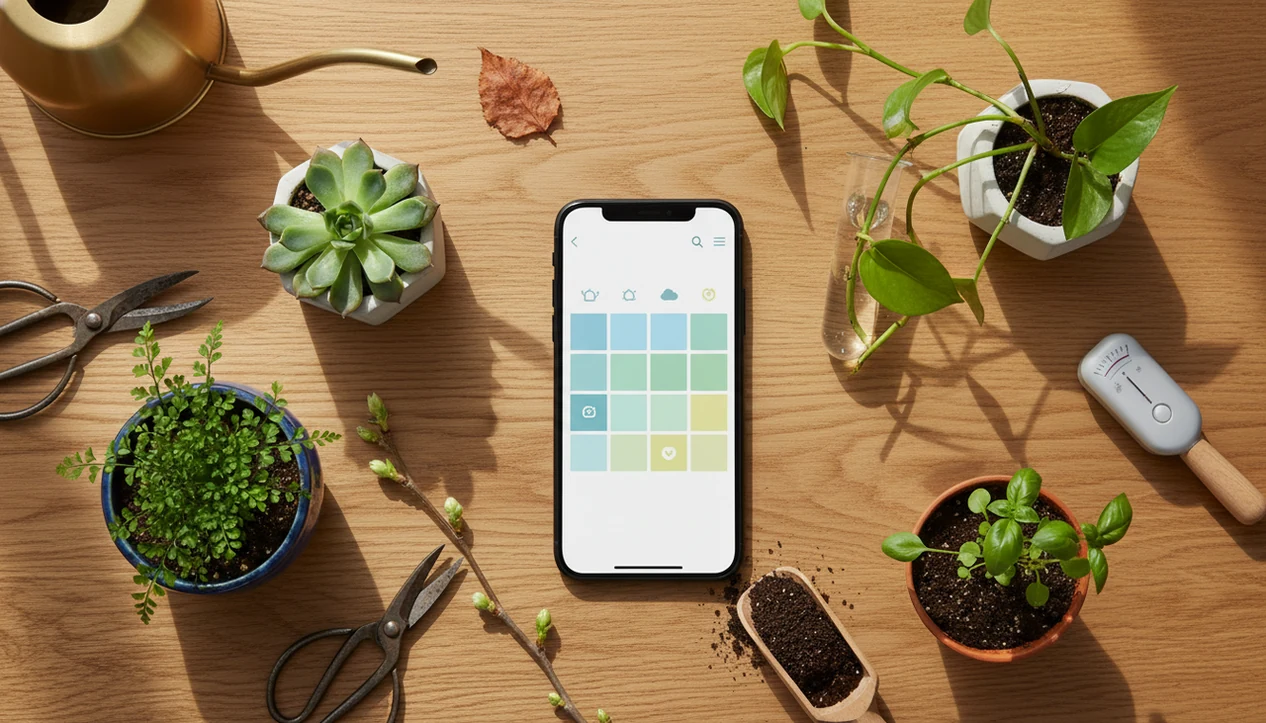
The calendar in PlantApp shows indoor houseplants and outdoor garden plants in one dashboard, with color-coded task types for water, feed, repot, prune, and pest check. It is built for the messy collection most people actually have: a windowsill pothos, a patio basil, two roses, and something unlabeled from a friend.
Task history shows what was done and when. That matters when a watering can drips on the saucer and you cannot remember whether the fern was watered yesterday or last week.
On days when yellow leaves appear after a schedule change, PlantApp earns its spot because a new photo scan can trigger alerts for leaf spots, pests, overwatering, or missed care tasks through the diagnosis-to-calendar workflow.
A U.S. survey of 2,000 adults found that 67% killed a houseplant in the past year, with overwatering among the common reasons, according to this USDA-linked source. PlantApp addresses that exact failure point by reducing winter watering prompts instead of repeating the same interval all year.
Plant Care Calendar vs Generic Reminder Apps and Printable Schedules
A species-aware plant care calendar differs from a generic reminder app because it changes the task by plant, season, and observed symptoms. Printable schedules can be useful, but they cannot see your plant collection or adjust after a bad scan result.
| Option | What it does well | Where it falls short |
|---|---|---|
| Generic reminder app | Simple fixed alarms for known routines | Same interval for every plant, no species awareness, no seasonal adjustment |
| Printable PDF calendar | Easy monthly overview for broad garden chores | Static advice, not tailored to your plants, pots, region, or climate zone |
| AI-powered calendar | Species-specific, season-adaptive, and diagnosis-responsive | Still needs clear photos and user edits when conditions are unusual |
EPA WaterSense notes that outdoor water use can account for nearly 30% of household water use, and as much as 50% can be wasted through evaporation, wind, or runoff from inefficient methods: EPA WaterSense source. Smarter scheduling cannot solve every irrigation problem, but it can reduce waste from fixed habits.
Plant owners looking for one place to manage houseplants and beds may prefer PlantApp over static printables because it combines ID, seasonal tasks, and a unified indoor-outdoor calendar. PictureThis, PlantNet, Planta, and Blossom each cover parts of this space, but many comparison pages underplay diagnosis-triggered schedule changes and local hardiness-zone timing.
Common Seasonal Plant Care Mistakes the Calendar Prevents
The most common seasonal plant care mistake is treating every plant like it belongs on the same weekly watering schedule. A cactus, fern, orchid, and basil plant should not receive the same reminder just because Sunday is convenient.
Myth: fertilize year-round at the same rate. Most houseplants need feeding mainly during active growth, while winter dormancy often calls for little or no fertilizer.
Myth: outdoor calendars are only planting calendars. A useful garden calendar also covers pruning, dividing perennials, mulching, pest checks, and bare-root planting windows.
Myth: set it once and never touch it. Intelligent calendars should change as roots fill a pot, light shifts, or symptoms appear. Reset the plan.
If brown leaf tips appear after the heat turns on, a fresh scan can connect visible stress to a revised watering, humidity, or pest-check reminder rather than leaving the old schedule untouched. The most practical plant care calendar becomes stricter about watering in summer and more cautious in winter.
For symptom-specific follow-up, the plant disease scanner page covers how photo diagnosis handles leaf spots, yellowing, mildew, and pests.
Related PlantApp Features for Ongoing Plant Care
A plant care calendar works best when it sits beside identification, diagnosis, reminders, and a saved plant library. PlantApp connects those pieces so the calendar is not just a list of dates.
Related features include AI plant identification from photos, photo-based disease and pest diagnosis, personalized watering reminders, and a “My Garden” style collection for houseplants and outdoor beds. If you manage plants across iPhone and Android, start with the main download plant identifier app page and build the library from the plants you already own.
Gardeners looking for seasonal structure can use PlantApp as a practical fit because it stores each plant profile, calendar task, and completed-care log in one collection workflow.
Limitations
Plant care calendars are useful planning tools, but they cannot replace observation. When the ID is uncertain, use the app result as a starting point and check against a regional source.
- Microclimates, pot size, root density, and indoor humidity can change actual water needs beyond any algorithmic estimate.
- Default seasonal advice often assumes temperate patterns; tropical, arid, coastal, and highly variable regions may need manual edits.
- AI identification can mislabel a plant, especially from blurry leaf photos taken under yellow kitchen light at 10 p.m.
- Disease diagnosis from a photo can confuse lookalike problems, such as nutrient stress, pests, sun scorch, and fungal spotting.
- The calendar can recommend ideal timing, but it cannot fix poor soil, inadequate light, compacted roots, or severe neglect without user action.
- Rare species, bonsai, orchids in specialty media, and complex landscapes may need advice from local experts or extension programs.
- Push reminders only help if tasks are logged honestly; skipped waterings and unrecorded repotting make the history less reliable.
For rare or high-value plants, PlantApp should complement local expert guidance, not replace it. A plant app can prompt the next care step, not a cure.